India’s business economy is increasingly shaped by cities.
States provide the broader economic environment, but cities are where companies, talent, capital, infrastructure, suppliers and customers interact. This makes city-level analysis particularly useful for businesses planning expansion, market research, sales prospecting or investment.
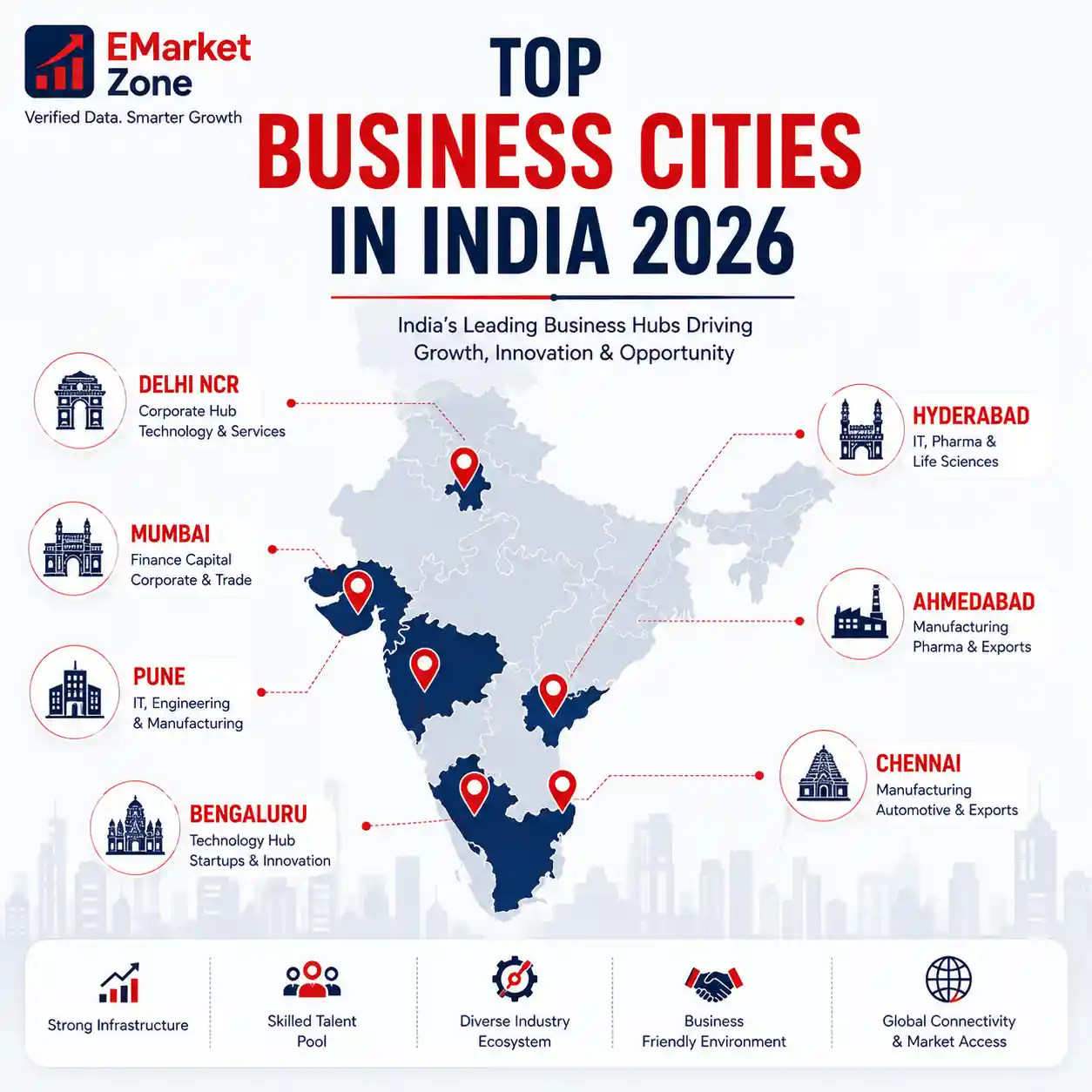
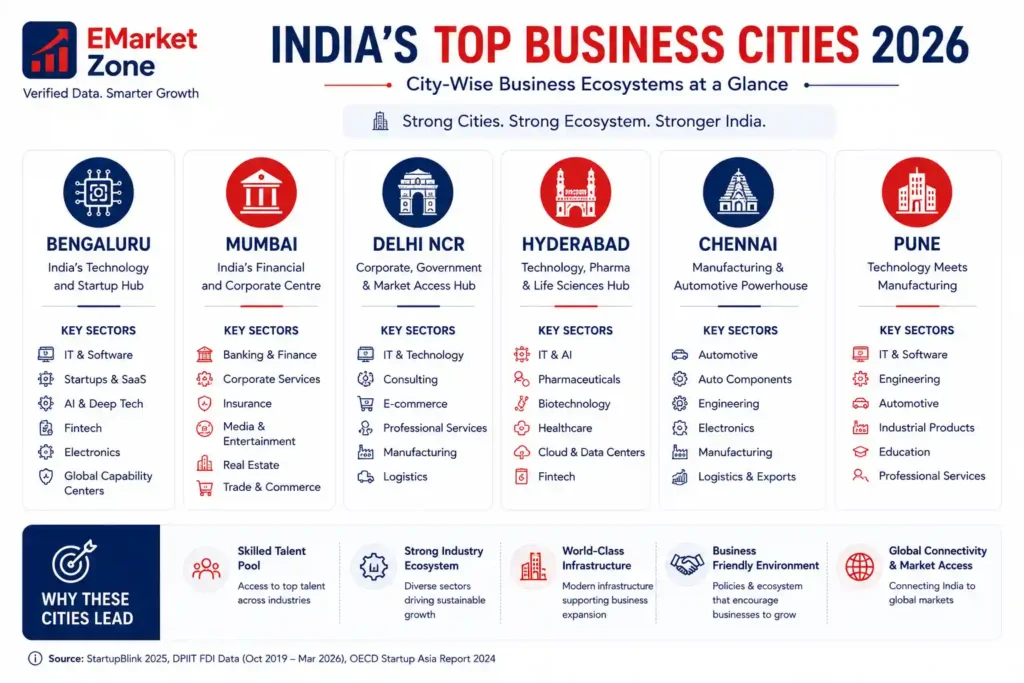
India does not have one universally accepted ranking of the “best business cities.” Different cities lead on different indicators. Bengaluru is exceptionally strong in technology and startups, Mumbai in finance and corporate activity, Chennai in manufacturing and automotive, Hyderabad in technology and life sciences, and Pune across technology and industrial activity.
The right city therefore depends on what a business is trying to achieve.
➡️ India Business Landscape Report 2026
For a comprehensive overview of India’s business ecosystem, explore our India Business Landscape Report 2026.
India's Major Business Hubs
Several cities have developed into nationally significant commercial ecosystems.
| City | Major Business Strengths | Strongest Opportunity Areas |
|---|---|---|
| Mumbai | Finance, corporate services, media, trade | Financial services, B2B services, corporate sales |
| Delhi NCR | Corporate, government, technology, services | Consulting, technology, professional services |
| Bengaluru | Technology, startups, SaaS, AI | IT, software, startups, technology services |
| Hyderabad | Technology, pharmaceuticals, life sciences | IT, healthcare, pharma, AI |
| Chennai | Manufacturing, automobiles, technology | Engineering, automotive, electronics |
| Pune | IT, engineering, manufacturing | Technology, industrial B2B, engineering |
| Ahmedabad | Manufacturing, pharmaceuticals, textiles | Industrial products, manufacturing, exports |
| Kolkata | Trading, logistics, services, manufacturing | Eastern India expansion, trade, logistics |
| Surat | Textiles, diamonds, manufacturing | Textile, jewellery, industrial suppliers |
| Gurugram | Corporate services, technology, startups | B2B services, technology, consulting |
This is an analytical classification, rather than an official government ranking.
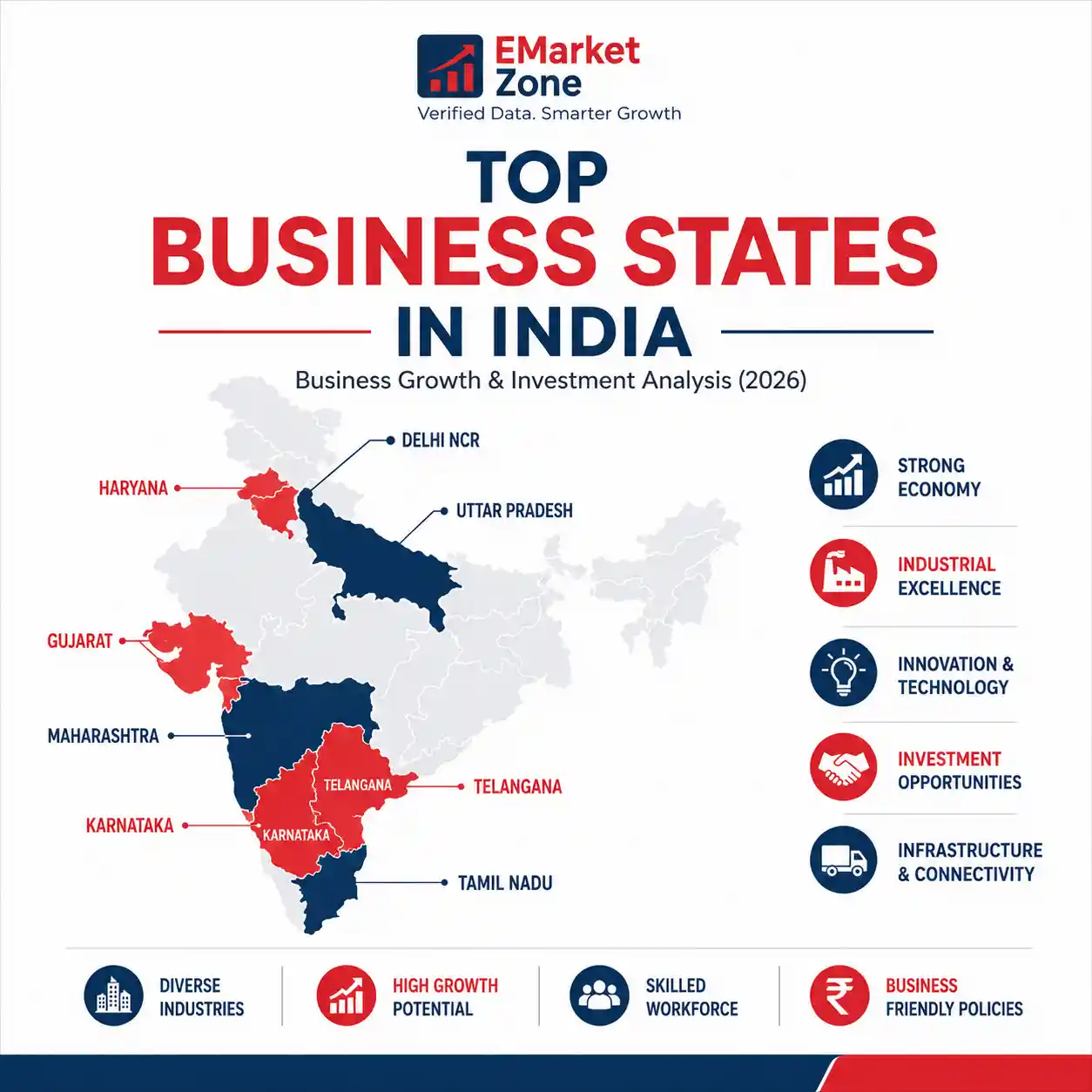
For state-level business comparisons, see Top Business States in India 2026.
1. Bengaluru - India's Technology and Startup Hub
Bengaluru remains one of India’s strongest technology-oriented business ecosystems.
Its advantages include a deep technology talent pool, startup infrastructure, software companies, global technology operations and a large concentration of investors and founders.
The OECD identifies Bengaluru, Delhi and Mumbai as India’s largest and most mature startup hubs, with those three cities together accounting for around 51% of Indian startups in the OECD’s analysis.
Bengaluru was also India’s highest-ranked city in StartupBlink’s 2025 Global Startup Ecosystem Index, ranking 10th globally.
Key sectors
• IT and software
• SaaS
• AI
• Fintech
• Deep technology
• Electronics
• Business services
• Startups
Best suited for: technology companies, software providers, SaaS businesses, investors and professional B2B services.
2. Mumbai - India's Financial and Corporate Centre
Mumbai occupies a different position from Bengaluru.
Its strength is not primarily technology startups but the concentration of financial institutions, large corporations, professional services, capital markets, media and major business decision-makers.
Mumbai was ranked 18th globally in StartupBlink’s 2025 ecosystem ranking and recorded the highest annual ecosystem growth among India’s major cities in that ranking.
Mumbai also remains India’s largest FDI-receiving state ecosystem through Maharashtra. DPIIT’s latest state-level data places Maharashtra first in cumulative FDI equity inflows for October 2019–March 2026.
Key sectors
• Banking and financial services
• Insurance
• Corporate services
• Media
• Real estate
• Professional services
• Trading
• Consumer businesses
Best suited for: financial services, enterprise sales, consulting, corporate services and high-value B2B offerings.
Checkout EMarket Zone city wise B2B Databases
3. Delhi NCR - Corporate and Market Access Hub
Delhi NCR should be treated as a regional business ecosystem, not simply Delhi city.
The wider NCR includes Gurugram, Noida, Ghaziabad and Faridabad, creating a large concentration of corporate offices, technology companies, professional services, manufacturing and logistics.
Delhi was ranked 11th globally in StartupBlink’s 2025 startup ecosystem ranking, immediately behind Bengaluru.
Gurugram and Noida have also developed strong technology, corporate and commercial ecosystems around the NCR.
Key sectors
• IT and technology
• Consulting
• Corporate services
• E-commerce
• Financial services
• Real estate
• Manufacturing
• Logistics
Best suited for: B2B services, consulting, technology, enterprise sales and companies targeting North India’s corporate market.
4. Hyderabad - Technology, Pharma and Life Sciences
Hyderabad has developed a strong combination of technology, pharmaceuticals and life sciences.
The city is also increasingly important for cloud computing and AI infrastructure. In August 2026, Microsoft launched its largest India data-centre hub in Hyderabad, adding to its existing Indian cloud regions in Pune, Chennai and Mumbai.
This combination gives Hyderabad a particularly interesting position: it is not dependent on one industry.
Key sectors
• IT
• AI
• Cloud computing
• Pharmaceuticals
• Biotechnology
• Healthcare
• Life sciences
• Financial technology
Best suited for: technology providers, healthcare businesses, pharmaceutical suppliers and B2B services.
5. Chennai - Manufacturing and Automotive Powerhouse
Chennai is one of India’s most important industrial and manufacturing cities.
Its ecosystem combines automobile manufacturing, engineering, electronics, IT services and port-linked trade.
This makes Chennai particularly valuable for businesses selling into industrial supply chains, rather than only office-based businesses.
Key sectors
• Automobiles
• Auto components
• Engineering
• Electronics
• Manufacturing
• IT services
• Logistics
• Exports
Best suited for: machinery suppliers, industrial services, engineering companies, logistics providers and manufacturing-focused businesses.
6. Pune - Technology Meets Manufacturing
Pune is unusual because it combines two strong ecosystems: technology and industrial manufacturing.
The city has significant activity in IT services, automotive, engineering, industrial products and education.
StartupBlink ranked Pune 79th globally in its 2025 ecosystem index, placing it among India’s major startup centres.
Key sectors
• IT
• Automotive
• Engineering
• Manufacturing
• Industrial technology
• Education
• Professional services
Best suited for: industrial B2B companies, technology providers, engineering firms and suppliers.
7. Ahmedabad - Manufacturing, Pharma and Enterprise Growth
Ahmedabad is one of India’s important industrial and commercial centres.
Its broader Gujarat ecosystem is particularly significant for manufacturing, pharmaceuticals, chemicals, textiles, engineering and exports.
Gujarat ranked third among Indian states for cumulative FDI equity inflows in DPIIT’s October 2019–March 2026 data, behind Maharashtra and Karnataka.
Key sectors
• Pharmaceuticals
• Chemicals
• Textiles
• Engineering
• Manufacturing
• Food processing
• Exports
Best suited for: industrial suppliers, manufacturers, pharmaceutical businesses and export-oriented companies.
8. Kolkata - Eastern India's Commercial Gateway
Kolkata remains an important commercial centre for eastern India.
Its strengths include trading, logistics, financial services, manufacturing and access to markets across eastern and northeastern India.
The city’s startup ecosystem has also shown notable recent growth. StartupBlink’s 2025 ranking placed Kolkata at 187th globally, with reported ecosystem growth of 45.7% in that year’s ranking.
Key sectors
• Trading
• Logistics
• Manufacturing
• Financial services
• Food
• Professional services
Best suited for: businesses expanding into eastern India, logistics, trading and regional B2B services.
9. Surat - Textile and Manufacturing Hub
Surat has a highly specialized business ecosystem built around textiles, diamonds, trading and manufacturing.
It is particularly relevant for businesses selling products or services into textile and industrial supply chains.
Key sectors
• Textiles
• Garments
• Diamonds
• Chemicals
• Manufacturing
• Trading
• Export businesses
Best suited for: textile suppliers, machinery companies, packaging, chemicals and B2B services.
10. Gurugram - Corporate and Technology Hub
Gurugram has developed into one of India’s most important corporate centres, particularly within the Delhi NCR ecosystem.
Its concentration of multinational companies, startups, technology companies, consulting firms and service businesses makes it particularly valuable for enterprise-focused sales.
Key sectors
• Technology
• Consulting
• Financial services
• E-commerce
• Real estate
• Corporate services
• Startups
Best suited for: SaaS, consulting, HR, financial services, enterprise technology and professional B2B services.
Business Cities Should Be Selected by Industry
The biggest mistake businesses make is asking:
“Which is the best business city in India?”
There is no useful universal answer.
A better question is:
“Which cities have the highest concentration of my target customers?”
For example:
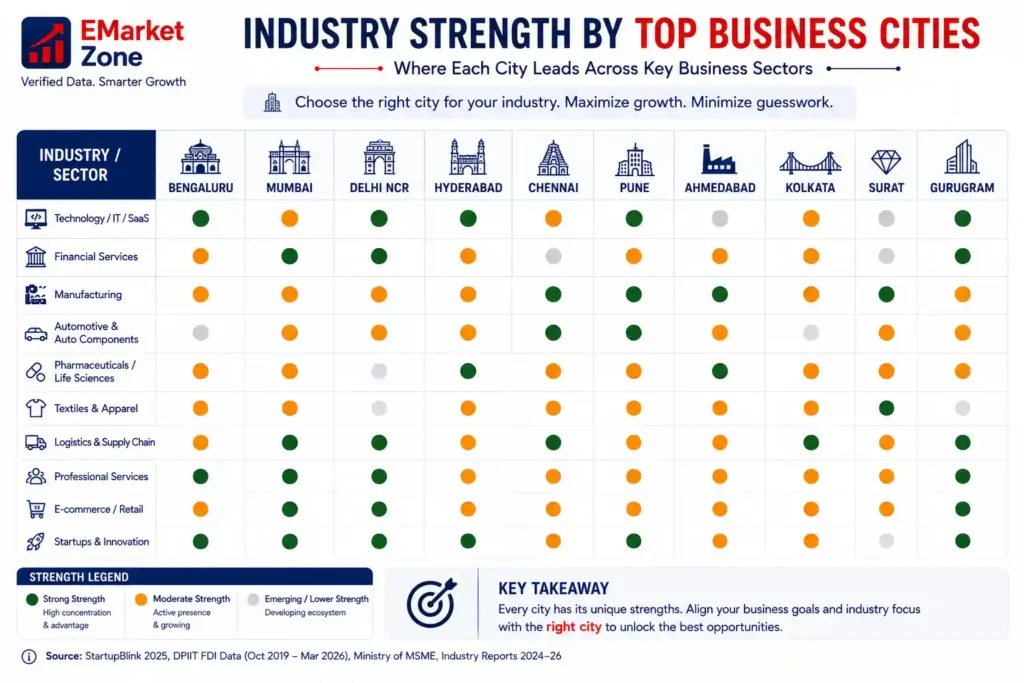
| Business Type | Cities to Prioritize |
|---|---|
| SaaS / IT | Bengaluru, Hyderabad, Delhi NCR, Pune, Chennai |
| Financial services | Mumbai, Delhi NCR, Bengaluru |
| Automobile | Chennai, Pune, Delhi NCR, Ahmedabad |
| Pharmaceuticals | Hyderabad, Ahmedabad, Mumbai |
| Textiles | Surat, Ahmedabad, Tiruppur |
| Manufacturing | Chennai, Pune, Ahmedabad, Bengaluru |
| Logistics | Mumbai, Delhi NCR, Chennai, Kolkata |
| Professional services | Mumbai, Delhi NCR, Bengaluru, Hyderabad |
| Export businesses | Mumbai, Chennai, Ahmedabad, Surat |
| Startups | Bengaluru, Delhi NCR, Mumbai, Hyderabad, Pune |
This approach is much more useful than simply targeting India’s largest cities.
For national-level statistics, explore India Business Statistics 2026.
The Shift from City Selection to Market Selection
Modern B2B expansion increasingly requires a more granular approach:
India
↓
State
↓
City
↓
Industry
↓
Business Type
↓
Target Companies
A company selling industrial machinery, for example, should not target every company in Bengaluru simply because Bengaluru is a major business city.
It should identify:
Bengaluru → Manufacturing → Engineering → Target company size → Decision-makers
This turns geographic information into actionable market intelligence.
What the Data Suggests
India’s business growth is becoming increasingly multi-polar.
The country’s commercial activity is no longer concentrated in Mumbai and Delhi alone. Bengaluru, Hyderabad, Chennai, Pune, Ahmedabad, Gurugram, Surat and other cities have developed highly specialized ecosystems.
The OECD’s analysis also highlights this wider geographic distribution of India’s startup economy, noting that around 12 Indian cities are among Asia’s 30 largest startup hubs.
This creates a major opportunity for businesses willing to look beyond the most obvious markets.
For detailed MSME data, see State-wise MSME Statistics in India 2026
How Businesses Can Use City-Level Data
City-level business intelligence can help companies:
• Identify expansion markets
• Prioritize sales territories
• Find industry clusters
• Build targeted prospect lists
• Identify suppliers
• Compare regional markets
• Plan field-sales operations
• Allocate advertising budgets
• Identify emerging business centres
The objective isn’t to collect the largest possible list of cities.
It is to identify the smallest number of cities that contain the highest concentration of your ideal customers.
Conclusion
.India’s leading business cities are increasingly specialized.
Bengaluru leads in technology and startups.
Mumbai dominates financial and corporate activity.
Delhi NCR provides broad corporate and northern-market access.
Hyderabad combines technology with pharmaceuticals and life sciences.
Chennai is a major manufacturing and automotive hub.
Pune connects technology with industrial businesses.
Ahmedabad has strong manufacturing and pharmaceutical ecosystems.
Kolkata remains an important eastern commercial centre.
Surat is highly relevant to textiles and manufacturing.
Gurugram is a major corporate and technology centre.
The right strategy is therefore not simply to target the biggest city.
It is to identify the right city for the right industry and the right customer segment.
Related Research
For the broader analysis of India’s business ecosystem, see the India Business Landscape Report 2026.
For state-level business comparisons, see Top Business States in India 2026.
For national-level statistics, explore India Business Statistics 2026.
For detailed MSME data, see State-wise MSME Statistics in India 2026
Explore Business Data
Reliable market expansion starts with reliable data.
EMarket Zone provides verified business databases covering:
• MSME Businesses
• Private Limited Companies
• Manufacturers
• GST Registered Businesses
• Exporters
• Industry-wise Databases
• State-wise Business Databases
• City-wise Business Databases
Whether you’re planning sales outreach, market expansion, competitive analysis, or investment research, our business intelligence solutions help you connect with the right businesses across India.
References
This article is based on publicly available information and industry research, including:
• Ministry of Corporate Affairs (MCA)
• Ministry of MSME
• Department for Promotion of Industry and Internal Trade (DPIIT)
• Reserve Bank of India (RBI)
• Ministry of Commerce & Industry
• National Statistical Office (NSO)
• Economic Survey of India
• Government of India Open Data Platform
• EMarket Zone Research & Analysis (2026)
Leave a comment