
One of the biggest challenges for MSMEs isn’t finding customers.
It’s knowing where the next customer will come from.
I’ve spoken with business owners who had great months followed by terrible months.
One month they’re struggling to keep up with inquiries.
The next month the phone barely rings.
The problem isn’t always the product.
It’s often the lack of a predictable sales pipeline.
Many MSMEs operate in a cycle that looks like this:
• Get busy with client work
• Stop marketing
• Pipeline dries up
• Panic and start searching for leads
• Get busy again
• Repeat
It’s exhausting.
And unfortunately, it’s common.
The businesses that grow consistently usually break this cycle.
They build a pipeline.
What Is a Sales Pipeline?
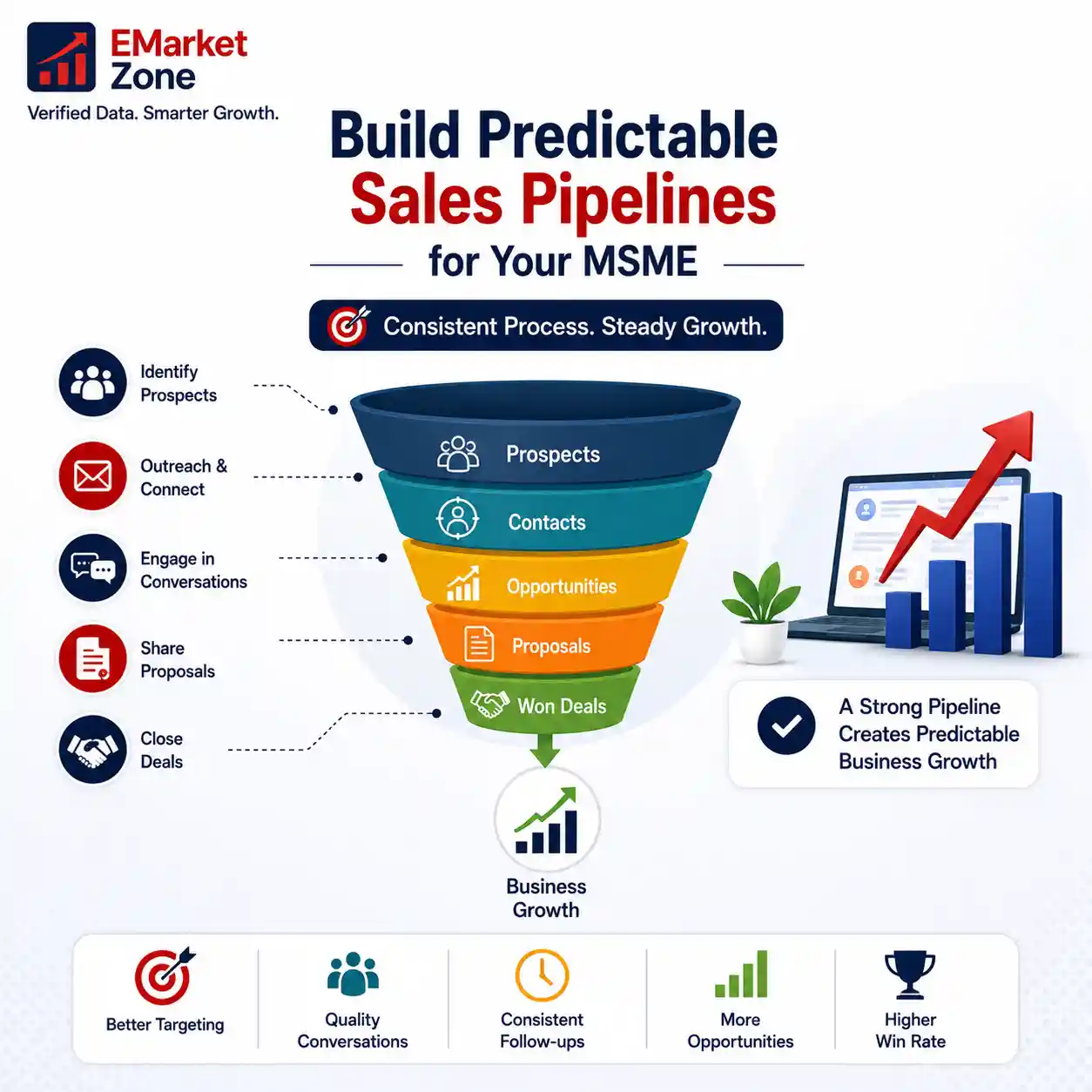
A sales pipeline is simply a system that tracks potential customers through different stages.
For example:
1. Prospect identified
2. Initial contact made
3. Conversation started
4. Proposal shared
5. Deal won
Not every prospect becomes a customer.
That’s normal.
The goal isn’t to close everyone.
The goal is to create a steady flow of opportunities.
Why Most MSMEs Struggle With Predictability
The biggest reason is dependence on referrals.
Referrals are valuable.
Many businesses are built on them.
But referrals are difficult to control.
You cannot decide how many referrals you’ll receive next month.
That’s why relying entirely on referrals creates uncertainty.
Predictable businesses usually have multiple lead sources.
The Shift That Changes Everything
Most struggling businesses ask:
“How do I get more customers?”
Growing businesses ask:
“How do I create more opportunities?”
That small shift changes the way you approach sales.
Customers are the outcome.
Opportunities come first.
Start With Your Ideal Customer
Before building a pipeline, MSMEs need clarity.
Who are you trying to reach?
Many businesses target everyone.
That sounds logical.
But it makes marketing harder.
A business serving manufacturers should communicate differently than a business serving consultants.
Clear targeting improves every stage of the pipeline.
Why Prospect Lists Matter
A pipeline cannot exist without prospects.
This is where many businesses get stuck.
They wait for inquiries instead of building prospect lists proactively.
A prospect list provides:
• structure
• consistency
• focus
Instead of wondering who to contact, you already know.
Business Leads India
https://emarketzone.in/business-leads-india/
The Importance of Decision-Makers
One lesson many business owners learn the hard way is that not all contacts are equal.
You may spend weeks talking to someone who has no authority to approve anything.
That’s why successful pipelines often focus on:
• owners
• founders
• directors
• CEOs
Conversations move faster when you’re speaking with decision-makers.
Buy Decision Makers Data India
https://emarketzone.in/buy-decision-makers-data-india/
Why Outreach Is Still Important
A lot of MSMEs want inbound leads.
That’s understandable.
Inbound leads are usually easier to convert.
The problem is that inbound takes time.
Outbound creates opportunities immediately.
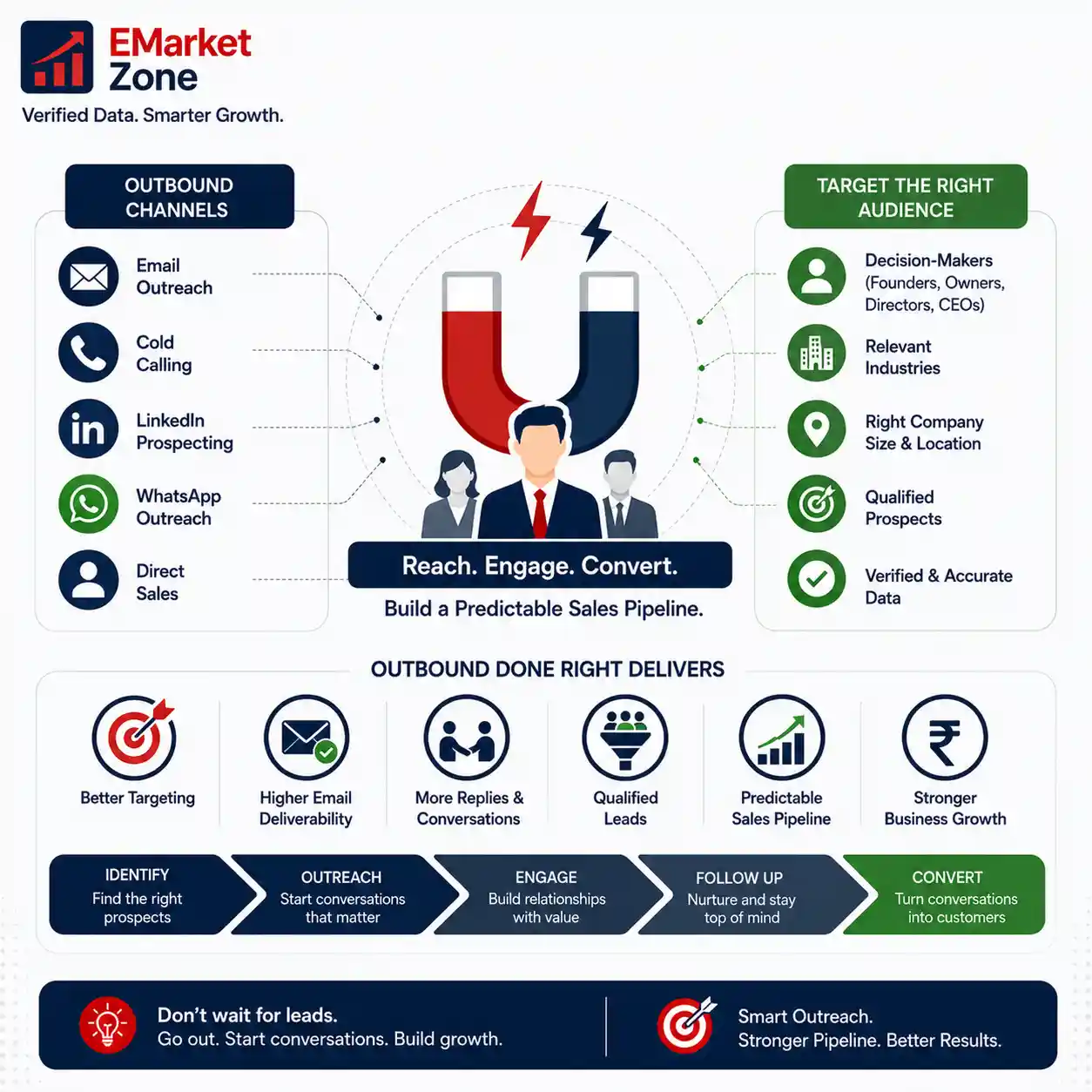
This can include:
• email outreach
• LinkedIn outreach
• phone calls
• WhatsApp communication
Done correctly, outreach becomes a predictable source of conversations.
Follow-Up Is Where Most Sales Are Lost
Many business owners assume that no response means no interest.
That’s rarely true.
People get busy.
Emails get buried.
Priorities change.
I’ve seen opportunities appear months after the initial conversation.
The businesses that follow up consistently usually outperform businesses that don’t.
Not because they’re smarter.
Because they’re more persistent.
Why Data Quality Matters
A pipeline is only as strong as the data behind it.
Poor data creates:
• bounced emails
• wrong numbers
• irrelevant prospects
This wastes time and reduces efficiency.
Accurate data helps businesses spend more time selling and less time fixing problems.
Verified Company Contacts India
https://emarketzone.in/verified-company-contacts-india/
Measuring What Matters
Many MSMEs don’t track their pipeline.
That’s a mistake.
Simple metrics can reveal a lot.
For example:
• Number of new prospects added each week
• Number of outreach attempts
• Number of conversations started
• Number of proposals sent
• Number of deals closed
These numbers help identify bottlenecks.
And what gets measured usually improves.
Building a Pipeline Doesn't Require Fancy Software
Some businesses think they need expensive CRM systems.
Not necessarily.
Many successful pipelines start with:
• a spreadsheet
• a simple CRM
• consistent habits
Technology helps.
But discipline matters more.
The Businesses That Win
The MSMEs that grow consistently aren’t always the biggest.
They aren’t always the most experienced.
And they aren’t always the cheapest.
They’re usually the businesses that create a steady flow of opportunities.
Because when opportunities are predictable, growth becomes predictable.
And that’s what every business owner ultimately wants.
Final Thoughts
Most MSMEs don’t have a sales problem.
They have a pipeline problem.
The businesses that rely entirely on referrals often experience unpredictable growth.
The businesses that build prospect lists, conduct outreach, follow up consistently, and track opportunities create something much more valuable.
Predictability.
A predictable sales pipeline doesn’t guarantee success.
But it gives businesses something far better than hope.
It gives them control.
FAQs
A sales pipeline is a structured process that tracks prospects from initial contact to becoming customers.
Not necessarily. Many businesses start with spreadsheets before moving to CRM software.
Most businesses begin seeing improvements within a few months of consistent prospecting and outreach.
Leave a comment