

One of the hardest parts of building a startup isn’t creating the product.
It’s getting people to care about it.
Most founders spend months building features.
Improving designs.
Fixing bugs.
Planning launches.
Then the product goes live and almost nobody shows up.
It’s a frustrating experience.
And it’s far more common than most founders admit.
The reality is that startups rarely fail because nobody needs the product.
They often fail because not enough people know the product exists.
That’s a lead generation problem.
The Mistake Most Startups Make
When founders talk about growth, they often focus on:
• product development
• fundraising
• hiring
• technology
Lead generation usually becomes important later.
Sometimes too late.
I’ve seen startups spend a year building something impressive without speaking to enough potential customers.
Then they launch and discover their assumptions were wrong.
The lesson is simple.
Lead generation shouldn’t start after launch.
It should start before launch.
Why Startups Need Customers Before They Need Scale
A lot of startup advice focuses on scaling.
The problem is that many businesses try to scale before they have a reliable customer acquisition process.
Scaling a broken process simply creates bigger problems.
Before thinking about growth, startups should answer:
• Who is our ideal customer?
• Where do they spend time?
• What problem are we solving?
• Why should they choose us?
Without clear answers, lead generation becomes guesswork.
The Advantage Startups Have
Startups often think they’re at a disadvantage compared to larger companies.
In some ways that’s true.
Larger businesses have:
• bigger budgets
• bigger teams
• stronger brand recognition
But startups have something valuable.
Speed.
A startup can test messaging, outreach strategies, and customer acquisition channels far faster than a large organization.
That flexibility is a major advantage.
Why Founders Should Do Prospecting
Many founders dislike prospecting.
They see it as sales.
But during the early stages, prospecting is one of the fastest ways to learn about customers.
Every conversation provides insights.
You learn:
• customer challenges
• objections
• buying triggers
• market demand
This information is often more valuable than months of internal discussions.
Building a Target Customer List
One thing that consistently helps startups is creating a structured prospect list.
Instead of targeting everyone, focus on businesses or individuals who are most likely to benefit from your solution.
A prospect list helps startups:
• prioritize outreach
• stay organized
• improve targeting
Business Leads India
https://emarketzone.in/business-leads-india/
Why Decision-Makers Matter
Early-stage startups usually have limited resources.
Every conversation matters.
That’s why reaching decision-makers is important.
Founders often waste time speaking with people who cannot approve purchases.
A conversation with the right person is usually more valuable than ten conversations with the wrong people.
Buy Decision Makers Data India
https://emarketzone.in/buy-decision-maker-data-india/
Content Is a Long-Term Asset
Most startups underestimate content.
They see it as a branding exercise.
But content can become one of the most effective lead generation channels over time.
A useful article can:
• attract prospects
• build trust
• answer questions
• generate inquiries
while you’re sleeping.
That’s difficult to achieve through direct outreach alone.
Why LinkedIn Works Well for Startups
For B2B startups, LinkedIn remains one of the best places to build visibility.
Potential customers are already there.
Decision-makers are already there.
The challenge is consistency.
The founders who see results usually:
• share insights
• discuss industry problems
• engage with prospects
rather than constantly promoting their product.
Why Most Startup Outreach Fails
The majority of outreach messages sound the same.
They focus on the product.
Not the customer.
Prospects care about outcomes.
Not features.
A startup that helps businesses save time should talk about saved time.
A startup that increases revenue should talk about revenue.
Simple.
But often overlooked.
The Importance of Follow-Up
Many startup founders quit too early.
One email.
One LinkedIn message.
No response.
Move on.
That approach leaves opportunities on the table.
People are busy.
Timing matters.
Consistent follow-up usually produces better results than constantly chasing new prospects.
Building a Startup Lead Generation System
The startups that generate customers consistently usually have a repeatable process.
Something simple:
1. Identify ideal customers
2. Build prospect lists
3. Create content
4. Conduct outreach
5. Follow up
6. Measure results
Nothing complicated.
Just consistent execution.
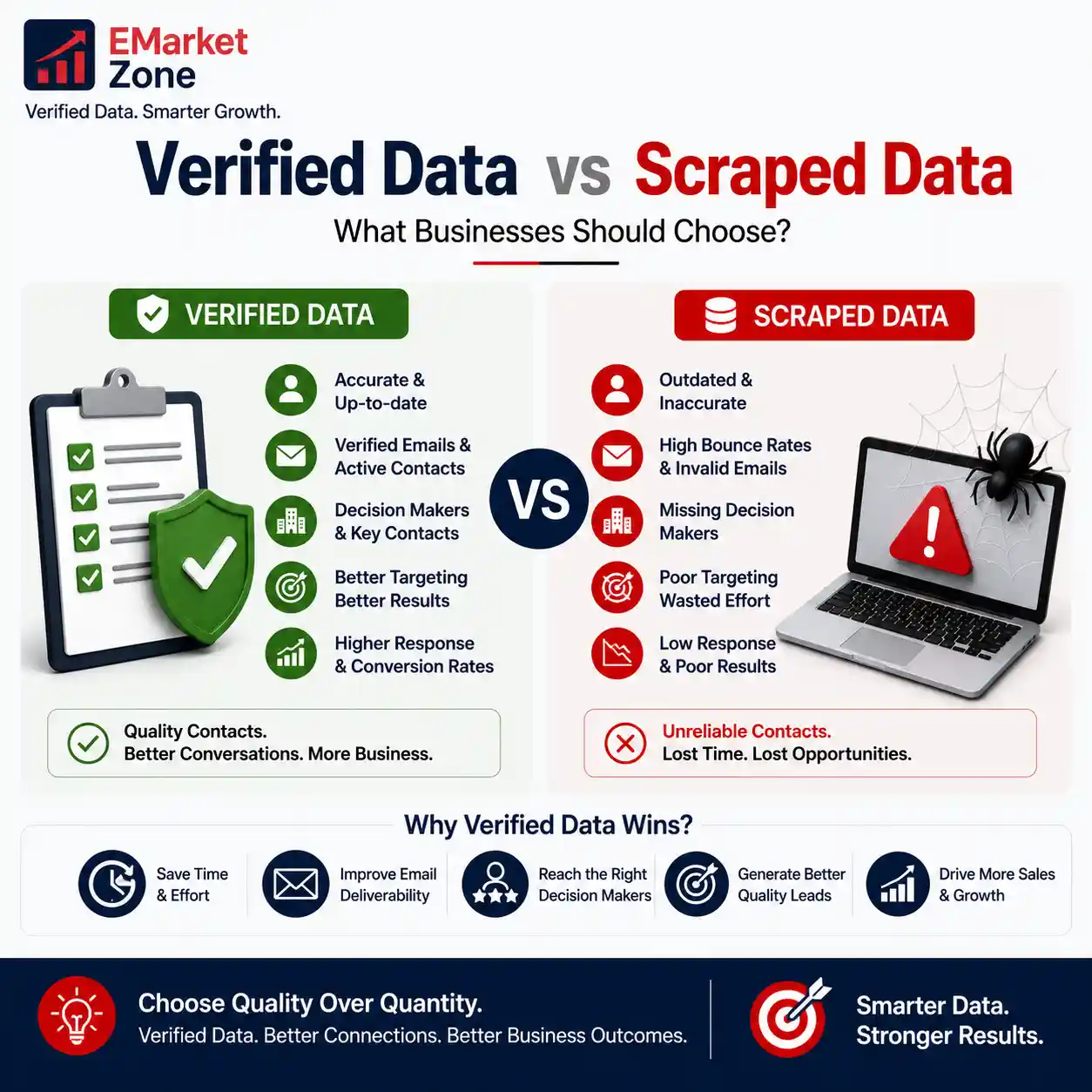
Why Data Quality Matters
Even great outreach struggles when contact information is inaccurate.
Poor-quality data often leads to:
• bounced emails
• wrong contacts
• wasted effort
Accurate information improves efficiency.
Verified Company Contacts India
https://emarketzone.in/verified-company-contacts-india/
Final Thoughts
Most startups don’t need more marketing hacks.
They need more conversations with potential customers.
Lead generation is not about collecting contacts.
It’s about creating opportunities.
The startups that succeed are rarely the ones with the biggest budgets.
They’re usually the ones that learn about customers fastest and build systems that consistently generate conversations.
That’s where growth begins.
FAQs
A combination of prospecting, content marketing, LinkedIn networking, and direct outreach often works well for startups.
Yes. Early customer conversations can help validate demand and improve product-market fit.
Yes. LinkedIn provides direct access to decision-makers and potential customers.
Many focus heavily on product development while spending too little time on customer acquisition.
It can be effective when messages focus on customer problems rather than product features.

Leave a comment