

One of the biggest misconceptions in B2B sales is that businesses need more leads.
In many cases, they don’t.
What they actually need is a better prospect list.
I’ve seen businesses spend money on advertising, cold outreach, and sales tools without first answering a simple question:
“Who exactly are we trying to reach?”
Without a clear prospect list, lead generation becomes difficult.
Sales teams waste time contacting the wrong companies, speaking to the wrong people, and chasing opportunities that were never a good fit.
Building a quality prospect list solves many of these problems before outreach even begins.
What Is a B2B Prospect List?
A B2B prospect list is a collection of businesses that match your ideal customer profile.
It usually contains:
• company names
• industry information
• locations
• phone numbers
• email addresses
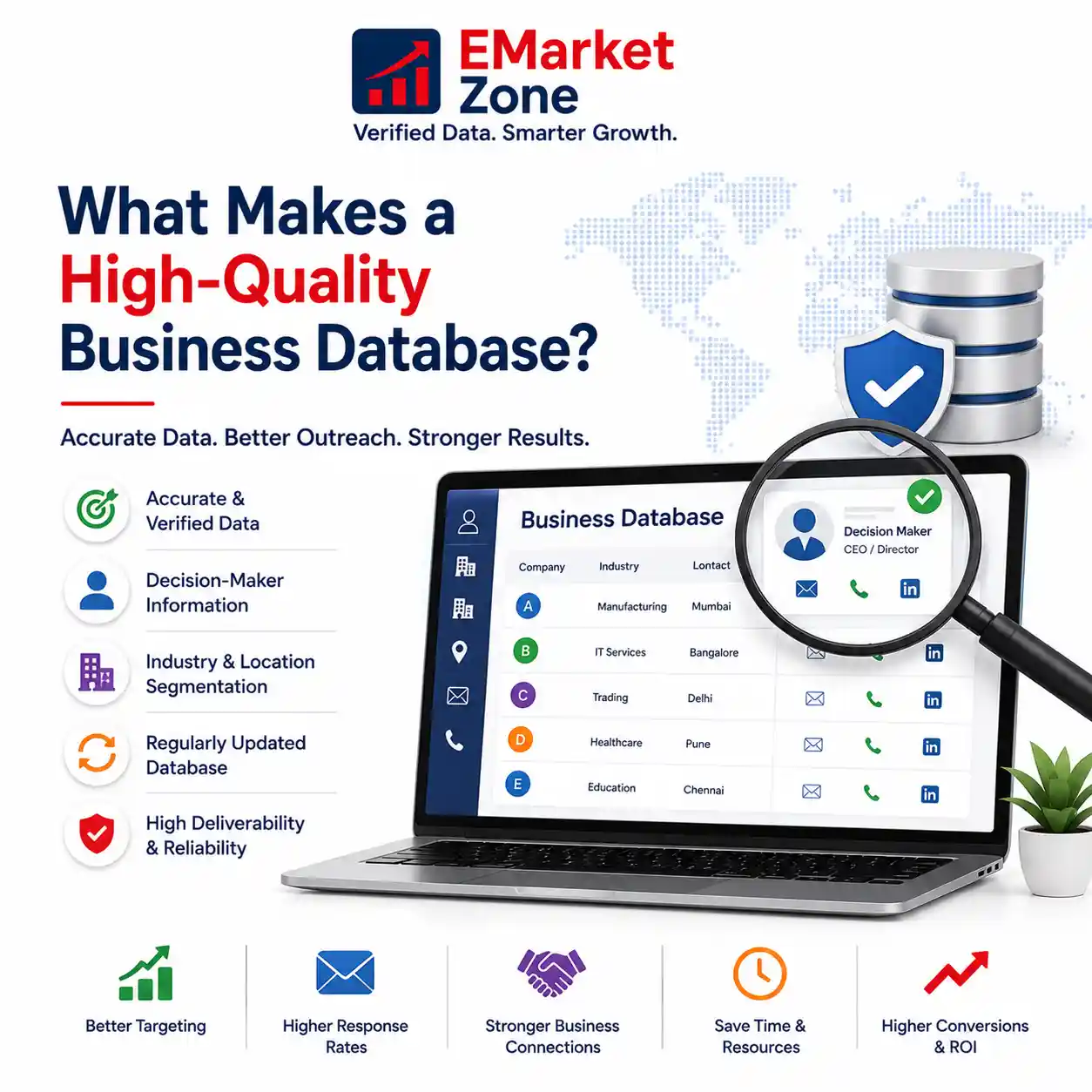
• decision-maker details
The purpose of a prospect list is simple.
It helps businesses identify who they should contact before starting outreach.
Without a prospect list, sales activity often becomes random.
Why Most Businesses Build Poor Prospect Lists
The most common mistake is trying to target everyone.
A business owner might say:
“Our product can work for any company.”
Technically, that might be true.
But practically, it’s a problem.
The broader the audience becomes, the harder it is to create relevant messaging.
The strongest prospect lists start with clear targeting.
Step 1: Define Your Ideal Customer
Before collecting contact information, define the type of business you want to work with.
Ask questions such as:
• Which industries need our service?
• What company size is the best fit?
• Which locations should we target?
• Who makes purchasing decisions?
This step is often overlooked, but it determines the quality of everything that follows.
Step 2: Identify Target Industries
Industry targeting makes prospecting much easier.
For example:
A software company may target:
• manufacturers
• exporters
• consultants
• agencies
Each industry has different challenges.
Each requires different messaging.
The more specific your targeting becomes, the better your outreach typically performs.
Industry Wise Business Database India
https://emarketzone.in/industry-wise-business-database-india/
Step 3: Focus on Decision-Makers
Many businesses build lists containing company information but ignore decision-makers.
This creates a major problem.
You may know the company.
But you don’t know who to contact.
The most useful prospect lists often include:
• founders
• owners
• directors
• CEOs
• partners
because these individuals influence purchasing decisions.
Business Owner Contact List India
https://emarketzone.in/business-owner-contact-list-india/
Buy Decision Makers Data India
https://emarketzone.in/buy-decision-maker-data-india/
Step 4: Choose Your Prospecting Method
There are generally two ways to build a prospect list.
Manual Prospecting
This involves researching companies individually through:
• Google
• LinkedIn
• business directories
• company websites
The advantage is accuracy and context.
The disadvantage is time.
Database-Based Prospecting
This approach uses structured business databases to identify prospects faster.
The advantage is scale.
The disadvantage is that data quality becomes important.
Company Database India
https://emarketzone.in/company-database-india/
Step 5: Verify Contact Information
A prospect list is only useful if the information is accurate.
Common issues include:
• inactive companies
• outdated contacts
• incorrect phone numbers
• invalid email addresses
Verification helps reduce wasted outreach.
Businesses that maintain cleaner data usually achieve better response rates.
Verified Company Contacts India
https://emarketzone.in/verified-company-contacts-india/
Step 6: Segment Your Prospect List
Not all prospects should receive the same message.
Segmentation allows businesses to group prospects by:
• industry
• company size
• location
• job title
This makes personalization easier.
And personalization usually improves engagement.
Why Most Prospect Lists Fail
Many businesses focus on collecting contacts.
They don’t focus on relevance.
A prospect list containing 50,000 random businesses is not necessarily valuable.
A list containing 5,000 highly relevant businesses often performs better.
Quality matters more than quantity.
The Relationship Between Prospecting and Lead Generation
Prospecting and lead generation are often treated as the same thing.
They are not.
Prospecting identifies potential customers.
Lead generation creates opportunities.
Prospecting happens first.
Without a strong prospect list, lead generation becomes less efficient.
Business Leads India
https://emarketzone.in/business-leads-india/
Why MSMEs Need Better Prospect Lists
Most MSMEs operate with limited sales resources.
They cannot afford to waste weeks researching irrelevant companies.
A targeted prospect list allows smaller teams to:
• focus outreach
• improve efficiency
• generate more conversations
This is why many MSMEs use structured databases rather than relying entirely on manual research.
MSME Business Database India
https://emarketzone.in/msme-business-database-india/
Common Prospect List Mistakes
Some of the most common mistakes include:
• targeting everyone
• ignoring decision-makers
• using outdated data
• failing to segment prospects
• prioritizing quantity over quality
These mistakes often reduce campaign performance before outreach even begins.
Final Thoughts
Building a B2B prospect list is not about collecting as many contacts as possible.
It’s about identifying businesses that are likely to benefit from your product or service.
The strongest prospect lists usually include:
• clear targeting
• relevant industries
• decision-maker contacts
• accurate information
• proper segmentation
Businesses that invest time in building better prospect lists often generate better outreach results, stronger conversations, and more qualified opportunities.
FAQs
A B2B prospect list is a collection of businesses and decision-makers that match your ideal customer profile.
Businesses can build prospect lists using manual research, business directories, LinkedIn, or verified business databases.
Decision-makers have authority to influence or approve purchasing decisions within a company.
Manual prospecting provides more context, while databases provide greater scale and efficiency.
Company name, industry, location, phone number, email address, and decision-maker details are commonly included.
Poor targeting, outdated information, lack of segmentation, and focusing on quantity over quality are common reasons.
MSMEs can improve prospecting by defining a clear audience, using verified data, and focusing outreach on decision-makers.

Leave a comment