
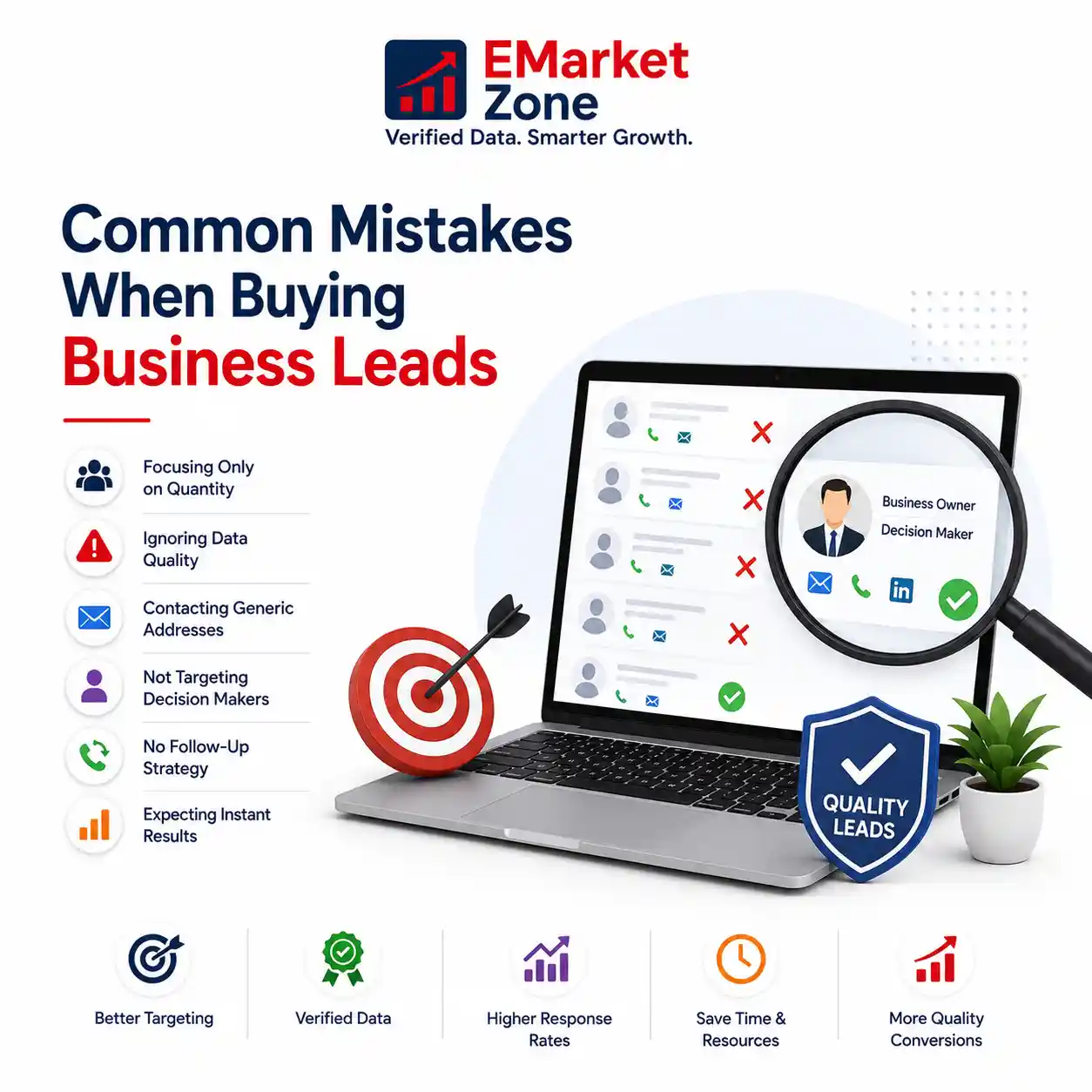





Buying business leads sounds simple.
Find a provider.
Purchase a database.
Start contacting prospects.
Generate sales.
In reality, the process is rarely that straightforward.
Many businesses buy lead databases expecting immediate results.
When those results don’t appear, they assume the database was the problem.
Sometimes it is.
Often it isn’t.
The truth is that many businesses make avoidable mistakes before they even begin outreach.
These mistakes reduce response rates, waste marketing budgets, and create unrealistic expectations.
Understanding these mistakes can help businesses make better decisions and improve lead generation outcomes.
Why Businesses Buy Lead Databases
Most businesses buy leads for one reason:
Growth.
They want to:
• generate more inquiries
• find new customers
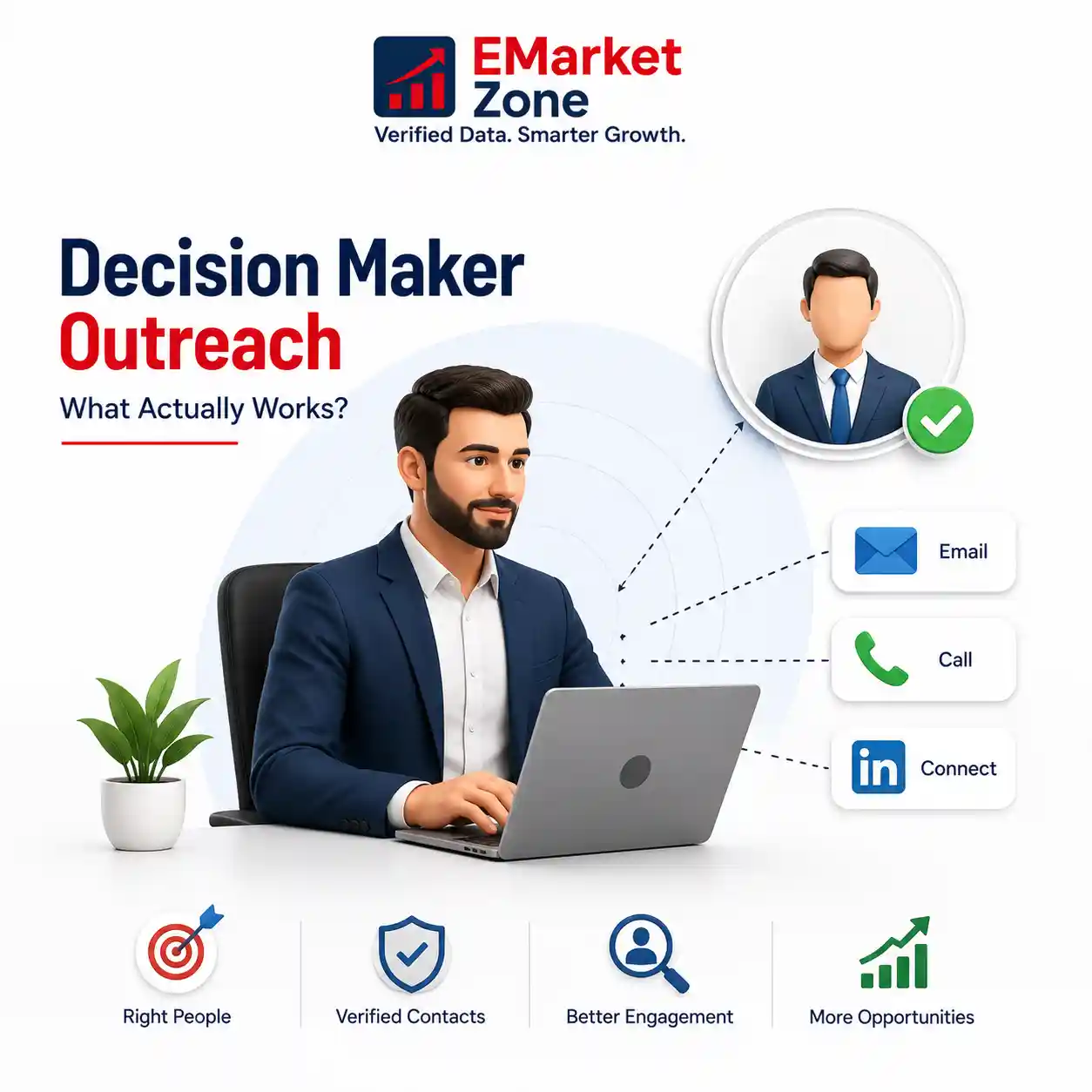
• reach decision-makers
• expand into new markets
• accelerate sales activity
A database can support those goals.
But a database alone does not create customers.
It creates opportunities.
The outreach process is what turns opportunities into conversations.
Mistake #1: Focusing Only on Quantity
One of the most common questions buyers ask is:
“How many contacts are included?”
The assumption is simple.
More contacts must mean better results.
Unfortunately, that is often false.
A list containing:
• 5,000 relevant prospects
can outperform a list containing:
• 500,000 unrelated contacts
The quality of targeting usually matters more than the size of the database.
Businesses should focus on relevance rather than volume.
Mistake #2: Expecting Instant Sales
Many buyers expect a database to generate customers immediately.
This creates unrealistic expectations.
A database provides:
• contacts
• companies
• decision-makers
It does not provide:
• trust
• conversations
• relationships
• sales
Those outcomes require outreach and follow-up.
The businesses generating the strongest results typically view databases as prospecting tools rather than sales shortcuts.
Mistake #3: Ignoring Industry Relevance
Not every prospect is a potential customer.
Yet many businesses purchase broad databases without considering industry fit.
For example:
A software company may purchase a general business database containing thousands of unrelated businesses.
The result is low relevance and poor engagement.
Industry-specific targeting often produces better outcomes.
Industry Wise Business Database India
https://emarketzone.in/industry-wise-business-database-india/
Mistake #4: Contacting Generic Company Addresses
Many outreach campaigns focus on:
• info@
• support@
• contact@
addresses.
These inboxes rarely belong to decision-makers.
Messages often go unread or get forwarded repeatedly.
Businesses usually achieve better results when they focus on:
• owners
• founders
• directors
• executives
Business Owner Contact List India
https://emarketzone.in/business-owner-contact-list-india/
Mistake #5: Ignoring Data Quality
All databases are not equal.
Poor-quality databases often contain:
• outdated contacts
• inactive companies
• incorrect email addresses
• invalid phone numbers
These issues reduce campaign performance.
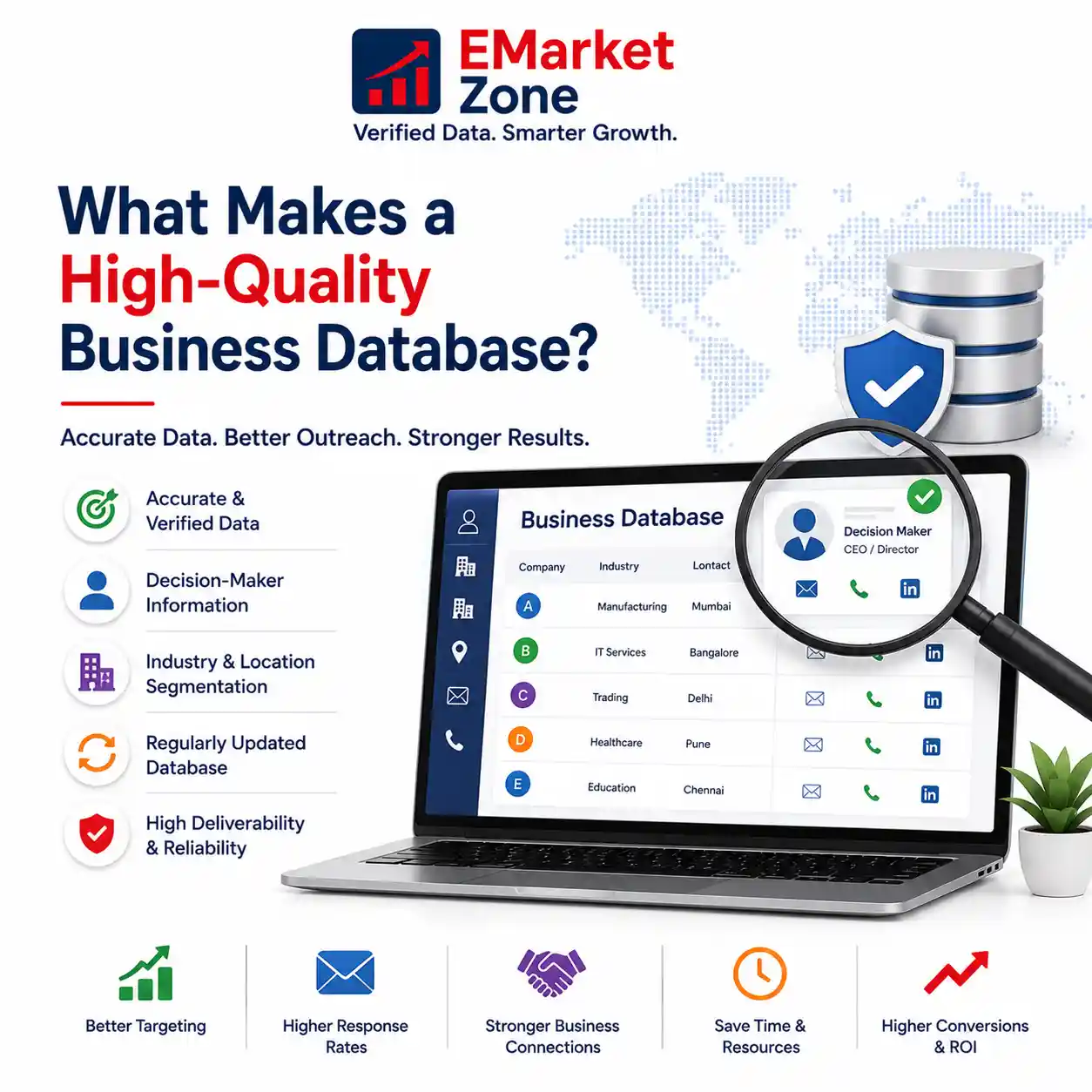
Before purchasing data, businesses should evaluate:
• accuracy
• freshness
• relevance
• verification processes
Verified Company Contacts India
https://emarketzone.in/verified-company-contacts-india/
Mistake #6: Using the Same Message for Everyone
Many businesses send identical messages to every prospect.
This usually produces poor engagement.
Different industries have different priorities.
Different decision-makers have different challenges.
Personalization does not require writing every message manually.
But relevance matters.
Prospects respond more frequently when outreach reflects their business situation.
Mistake #7: Not Following Up
This mistake is surprisingly common.
Businesses send one email and stop.
Or make one call and move on.
Decision-makers are busy.
A lack of response does not always mean lack of interest.
Many successful campaigns generate results through structured follow-up.
Businesses that follow up consistently often outperform businesses that focus solely on acquiring more leads.
Mistake #8: Choosing Price Over Value
Low-cost databases can be tempting.
However, the cheapest option is not always the most cost-effective.
A poor-quality database may create:
• bounced emails
• wasted outreach
• low response rates
• reduced productivity
Sometimes paying more for higher-quality data reduces acquisition costs over time.
Mistake #9: Failing to Define an Ideal Customer
Many businesses buy databases before defining their target audience.
This creates problems immediately.
Before purchasing leads, businesses should identify:
• industries
• company size
• locations
• decision-maker roles
Without these criteria, even high-quality data becomes difficult to use effectively.
Mistake #10: Believing Data Alone Generates Leads
This is perhaps the biggest misconception.
Businesses often treat databases as lead generation systems.
They are not.
Databases support lead generation.
Actual lead generation still requires:
• targeting
• messaging
• outreach
• follow-up
The strongest results come from combining quality data with effective execution.
Business Leads India
https://emarketzone.in/business-leads-india/
What Businesses Should Look for Instead
When evaluating lead providers, businesses should focus on:
• relevance
• verification
• segmentation
• decision-maker access
• industry targeting
The objective is not simply buying contacts.
The objective is improving outreach efficiency.
Company Database India
https://emarketzone.in/company-database-india/
Why MSMEs Must Be More Selective
Large companies can absorb inefficient marketing spending.
Most MSMEs cannot.
This makes data quality especially important.
Smaller businesses often benefit from targeted databases because they allow teams to focus limited resources on the most relevant prospects.
MSME Business Database India
https://emarketzone.in/msme-business-database-india/
Final Thoughts
Buying business leads is not inherently good or bad.
The outcome depends on how the data is selected and used.
Businesses that focus on:
• relevance
• targeting
• data quality
• decision-maker access
• consistent follow-up
usually generate stronger results.
The goal should never be to buy the largest database.
The goal should be to buy the most useful one.
FAQs
Yes, when they contain relevant and verified contacts that match your target audience.
Focusing on quantity instead of relevance and targeting.
Evaluate data freshness, industry relevance, verification methods, and decision-maker coverage.
In many cases, yes. Industry-focused databases often produce better engagement than broad contact lists.
Common reasons include poor targeting, generic messaging, inaccurate data, and lack of follow-up.
Yes. Verified data improves deliverability, targeting accuracy, and outreach efficiency.
No. Databases provide access to prospects. Sales still require outreach, relationship-building, and follow-up.
Leave a comment