
A business owner once told me:
“We’ve sent more than 20,000 emails this month and barely received any responses.”
At first, he thought the problem was his email copy.
Then he blamed the offer.
Then he blamed the sales team.
Eventually, he discovered the real problem.
The data.
A large percentage of contacts were outdated, irrelevant, or simply incorrect.
The campaign never had much chance of succeeding.
And that’s the thing many businesses overlook.
When lead generation doesn’t work, people usually blame marketing.
Few people blame the data.
But data quality often determines whether an outreach campaign succeeds or fails before the first email is ever sent.
Most Lead Generation Problems Start Earlier Than You Think
When businesses think about lead generation, they usually focus on:
• email campaigns
• cold calling
• LinkedIn outreach
• paid advertising
These activities are important.
But they all depend on one thing.
The quality of the underlying data.
If the data is poor, every activity becomes less effective.
It’s similar to trying to build a house on a weak foundation.
The effort may be impressive.
The result usually isn’t.
What Is Data Quality?
In simple terms, data quality refers to how accurate, complete, relevant, and up-to-date your information is.
For lead generation, this may include:
• company names
• phone numbers
• email addresses
• industries
• job titles
• decision-maker details
The better this information is, the easier it becomes to reach the right prospects.
Why Businesses Ignore Data Quality
Honestly, data quality isn’t exciting.
Most businesses would rather discuss:
• sales strategies
• conversion rates
• marketing campaigns
Data feels like a technical detail.
Until it starts causing problems.
Then suddenly everyone realizes how important it is.
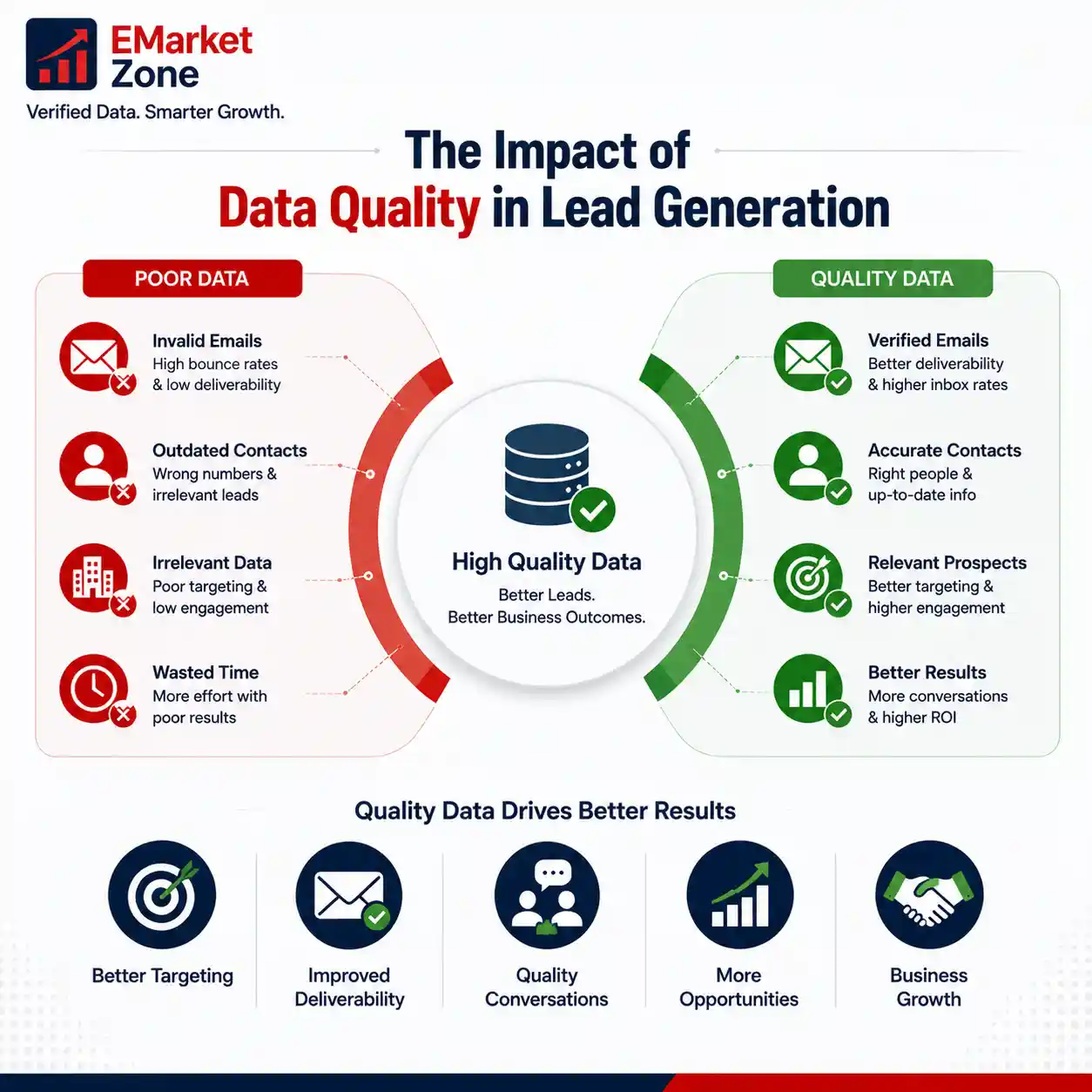
The Hidden Cost of Poor Data
Poor-quality data creates problems that aren’t always obvious.
For example:
Wasted Outreach
Sales teams spend time contacting people who are no longer relevant.
Invalid Emails
Messages bounce because email addresses no longer exist.
Wrong Contacts
The person you’re contacting may have left the company years ago.
Lower Productivity
Teams spend more time fixing data problems than generating opportunities.
These costs accumulate quickly.
Why Accurate Data Improves Results
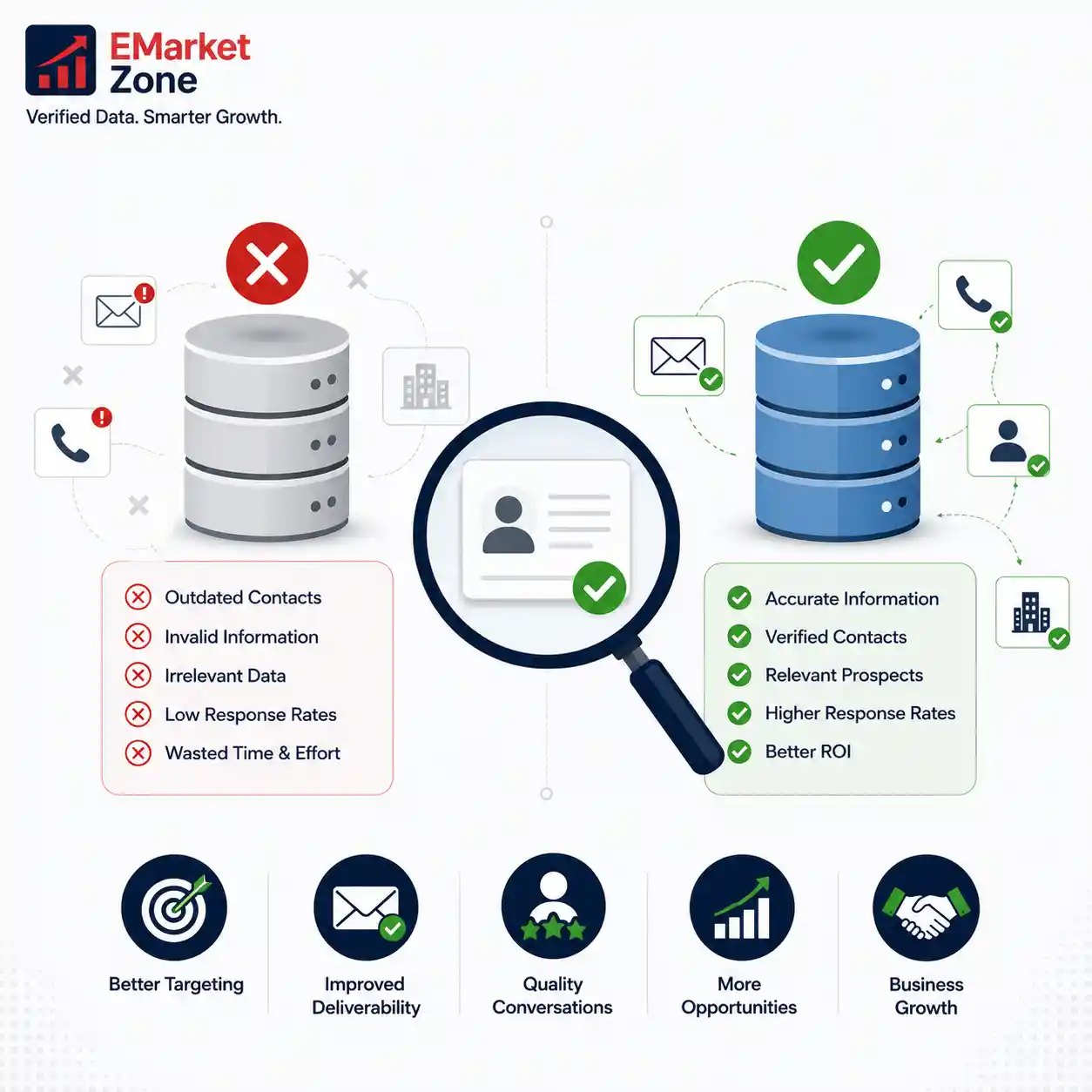
Imagine two businesses.
Both send 1,000 outreach emails.
Business A uses outdated contact information.
Business B uses verified and updated data.
Which one is more likely to generate responses?
The answer is obvious.
The quality of the campaign may be identical.
The difference is the quality of the audience.
Better Data Improves Targeting
One of the biggest advantages of high-quality data is relevance.
Instead of contacting random companies, businesses can focus on prospects that actually match their ideal customer profile.
This improves:
• engagement
• response rates
• efficiency
Industry Wise Business Database India
https://emarketzone.in/industry-wise-business-database-india/
Why Decision-Maker Data Is Important
A common mistake in lead generation is contacting companies without identifying the people who make decisions.
You may reach the company.
But not the person who can approve a purchase.
Quality data often includes:
• founders
• owners
• directors
• CEOs
• decision-makers
This significantly improves outreach efficiency.
Buy Decision Makers Data India
https://emarketzone.in/buy-decision-maker-data-india/
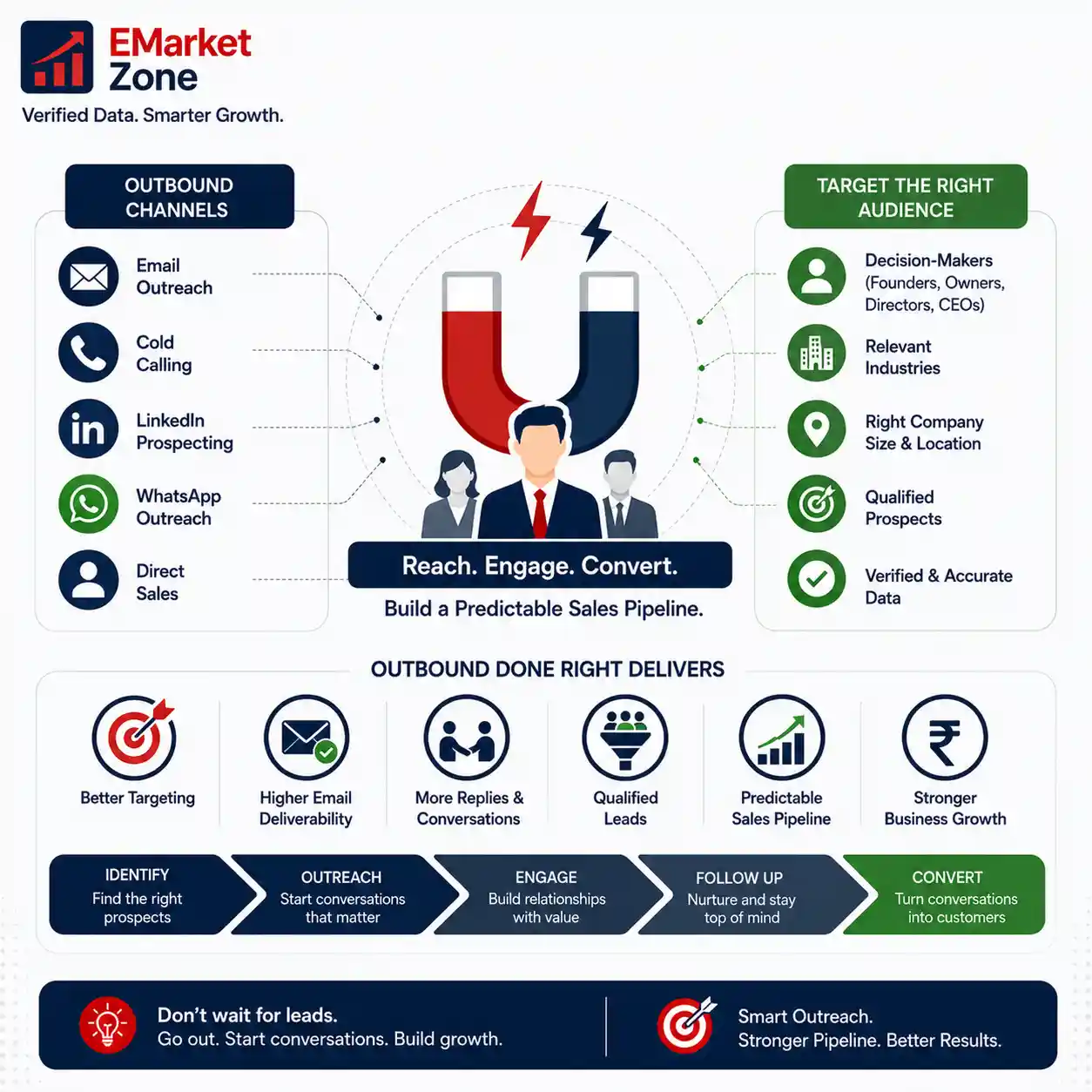
Data Quality Impacts Every Channel
Many people associate data quality with email marketing.
But its impact goes much further.
Good data improves:
Email Outreach
Better deliverability and targeting.
Cold Calling
Fewer wrong numbers and disconnected calls.
LinkedIn Prospecting
More accurate prospect identification.
Sales Pipelines
Cleaner records and better opportunity tracking.
The benefits extend across the entire lead generation process.
Why More Data Isn't Always Better
Businesses often compare databases based on record counts.
For example:
• 50,000 contacts
• 100,000 contacts
• 500,000 contacts
The assumption is that larger databases create better results.
That’s not always true.
A smaller database containing highly relevant and accurate contacts often outperforms a much larger database filled with outdated information.
Quality beats quantity surprisingly often.
The Relationship Between Data Quality and ROI
Every outreach activity costs something.
Time.
Money.
Effort.
Poor data reduces the return on those investments.
Good data improves it.
That’s why many businesses view data quality as an investment rather than an expense.
How Businesses Can Improve Data Quality
The first step is recognizing that data requires maintenance.
Information changes constantly.
Businesses can improve quality by:
• updating records regularly
• removing duplicates
• verifying contacts
• focusing on relevance
Verified Company Contacts India
https://emarketzone.in/verified-company-contacts-india/
Final Thoughts
Most businesses spend considerable effort improving their marketing.
Far fewer spend time improving their data.
Yet data quality influences almost every stage of lead generation.
The quality of your outreach often depends on the quality of your information.
Better data creates:
• better targeting
• better conversations
• better opportunities
And ultimately, better business outcomes.
That’s why data quality isn’t just a technical issue.
It’s a growth issue.
FAQs
Data quality improves targeting, outreach efficiency, response rates, and lead generation performance.
Accurate data improves deliverability, reduces bounce rates, and helps reach relevant prospects.
Decision-makers influence purchasing decisions and help move sales conversations forward.
No. Smaller databases with accurate and relevant contacts often outperform larger generic databases.
Businesses can verify contacts, update records regularly, remove duplicates, and focus on relevant prospects.
Leave a comment