
A few years ago, a business owner told me something interesting.
He had purchased a database containing more than one million contacts.
He was excited.
After all, more contacts should mean more opportunities.
At least that’s what he thought.
A few weeks later, he was frustrated.
The campaign generated very few meaningful conversations.
Response rates were low.
Sales opportunities were limited.
And suddenly that huge database didn’t look so valuable anymore.
The problem wasn’t outreach.
The problem wasn’t the product.
The problem was relevance.
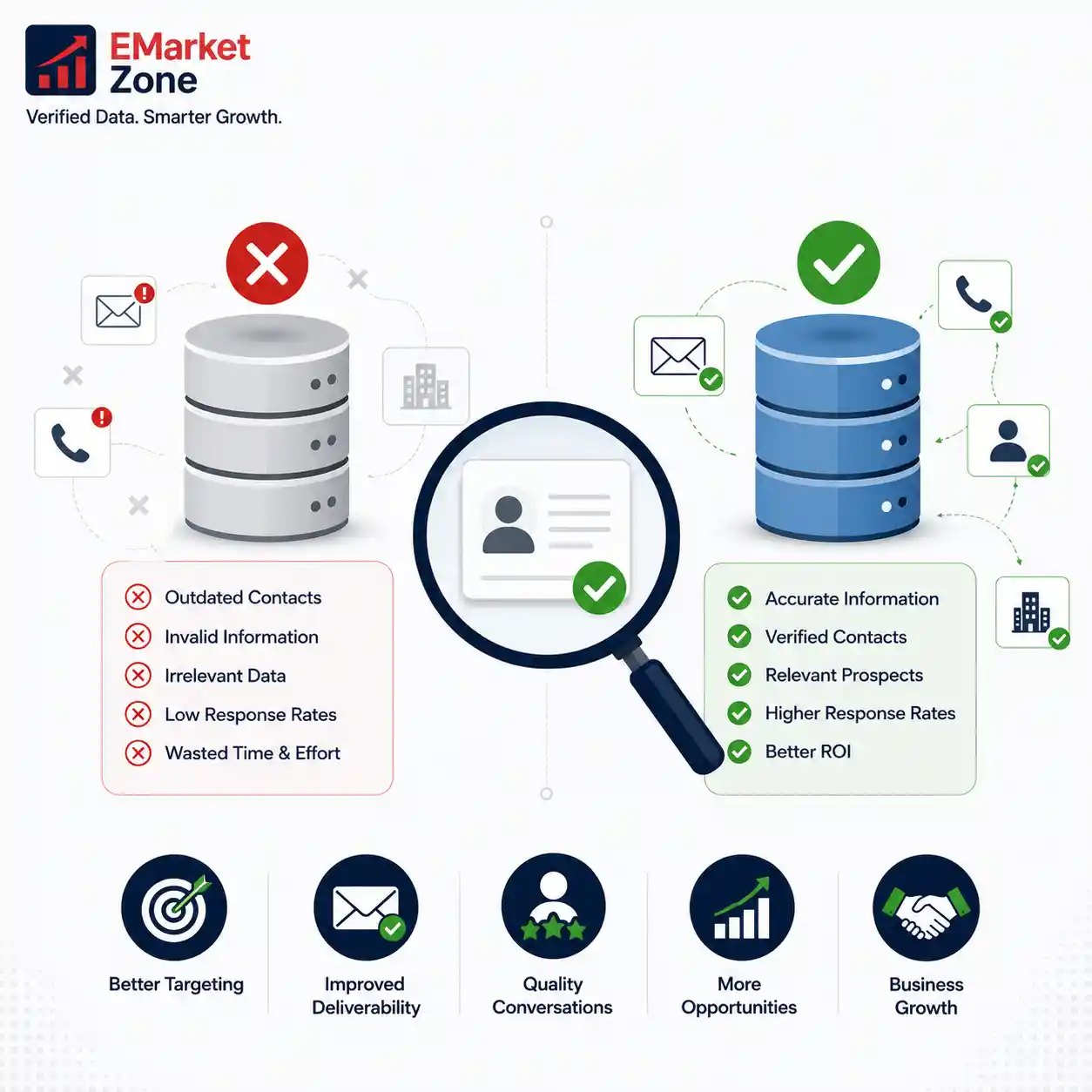
This is one of the biggest reasons generic databases fail.
The Appeal of Large Databases
It’s easy to understand why businesses are attracted to large databases.
The sales pitch sounds convincing.
More contacts.
More companies.
More opportunities.
Bigger numbers create the impression of greater value.
But lead generation isn’t a numbers game.
It’s a relevance game.
A database containing 500,000 irrelevant contacts will usually perform worse than a database containing 10,000 highly relevant prospects.
That’s the reality many businesses discover after they start using generic data.
What Is a Generic Database?
A generic database is typically a broad collection of businesses from multiple industries, locations, and company sizes.
For example, it might contain:
• manufacturers
• consultants
• retailers
• exporters
• agencies
• distributors
all mixed together.
The database may be large.
But size alone doesn’t create value.
The question is:
How many of those businesses are actually potential customers?
Why Relevance Matters More Than Quantity
Imagine you sell software designed specifically for manufacturing companies.
Would a list containing thousands of retailers help you?
Probably not.
Would a list containing restaurant owners help you?
Again, probably not.
Yet many generic databases contain large amounts of irrelevant information.
The result is wasted outreach.
Businesses spend time contacting prospects who were never likely to become customers.
The Hidden Cost of Generic Databases
Most people focus on the purchase price.
They rarely calculate the operational cost.
Consider what happens when sales teams use poor-quality prospect lists.
They spend time:
• sending emails
• making calls
• researching contacts
• following up
If most prospects are irrelevant, that effort produces very little return.
The database may have been inexpensive.
The wasted time is not.
Why Targeted Databases Perform Better
Targeted databases are built around specific audiences.
Examples include:
• manufacturers
• exporters
• MSMEs
• business owners
• decision-makers
Because the audience is more focused, outreach becomes more relevant.
And relevance improves results.
Industry Wise Business Database India
https://emarketzone.in/industry-wise-business-database-india/
The Problem With "Everyone Is My Customer"
This is one of the most common mistakes in B2B marketing.
A business owner says:
“Our service can help any company.”
Technically that may be true.
But practical lead generation requires focus.
When everyone becomes the target audience, messaging becomes generic.
Generic messaging produces generic results.
The strongest campaigns begin with a clearly defined audience.
Why Decision-Makers Matter
Another weakness of many generic databases is the lack of decision-maker information.
Knowing a company exists isn’t enough.
You also need to know who influences purchasing decisions.
This may include:
• founders
• owners
• directors
• CEOs
• procurement heads
Without this information, outreach often becomes less effective.
Buy Decision Makers Data India
https://emarketzone.in/buy-decision-maker-data-india/
Better Data Creates Better Conversations
Lead generation isn’t about collecting contacts.
It’s about creating conversations.
Relevant prospects are more likely to:
• respond
• engage
• ask questions
• explore solutions
Irrelevant prospects usually ignore outreach.
This is why better targeting frequently produces better outcomes.
Why Generic Databases Hurt Personalization
Modern outreach depends heavily on relevance.
Businesses expect communication that feels personalized.
A generic database makes personalization difficult because:
• industries vary
• challenges vary
• priorities vary
A manufacturing company and a consulting firm rarely have identical needs.
Yet generic outreach often treats them the same way.
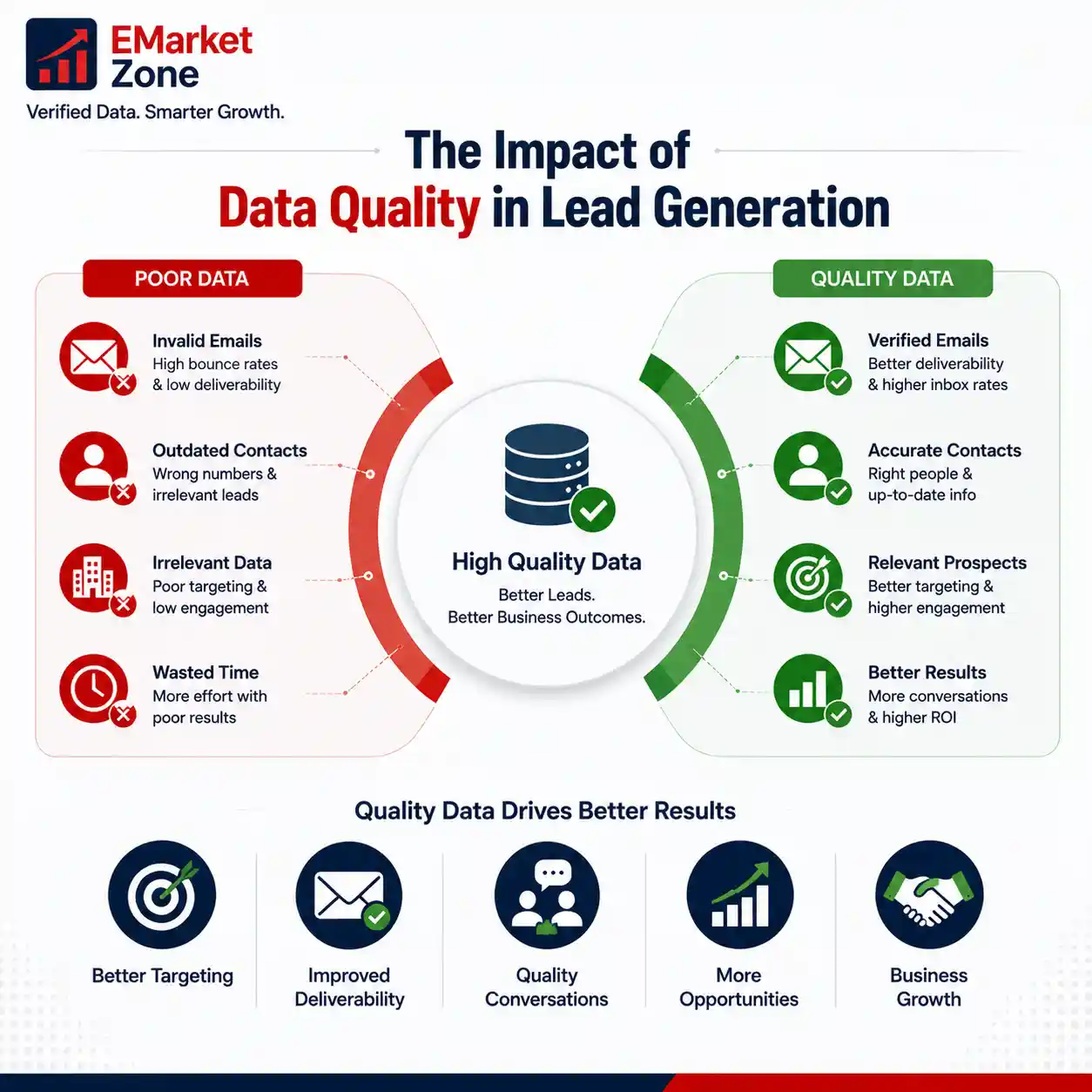
The Relationship Between Data Quality and Results
Many businesses think their outreach strategy is failing.
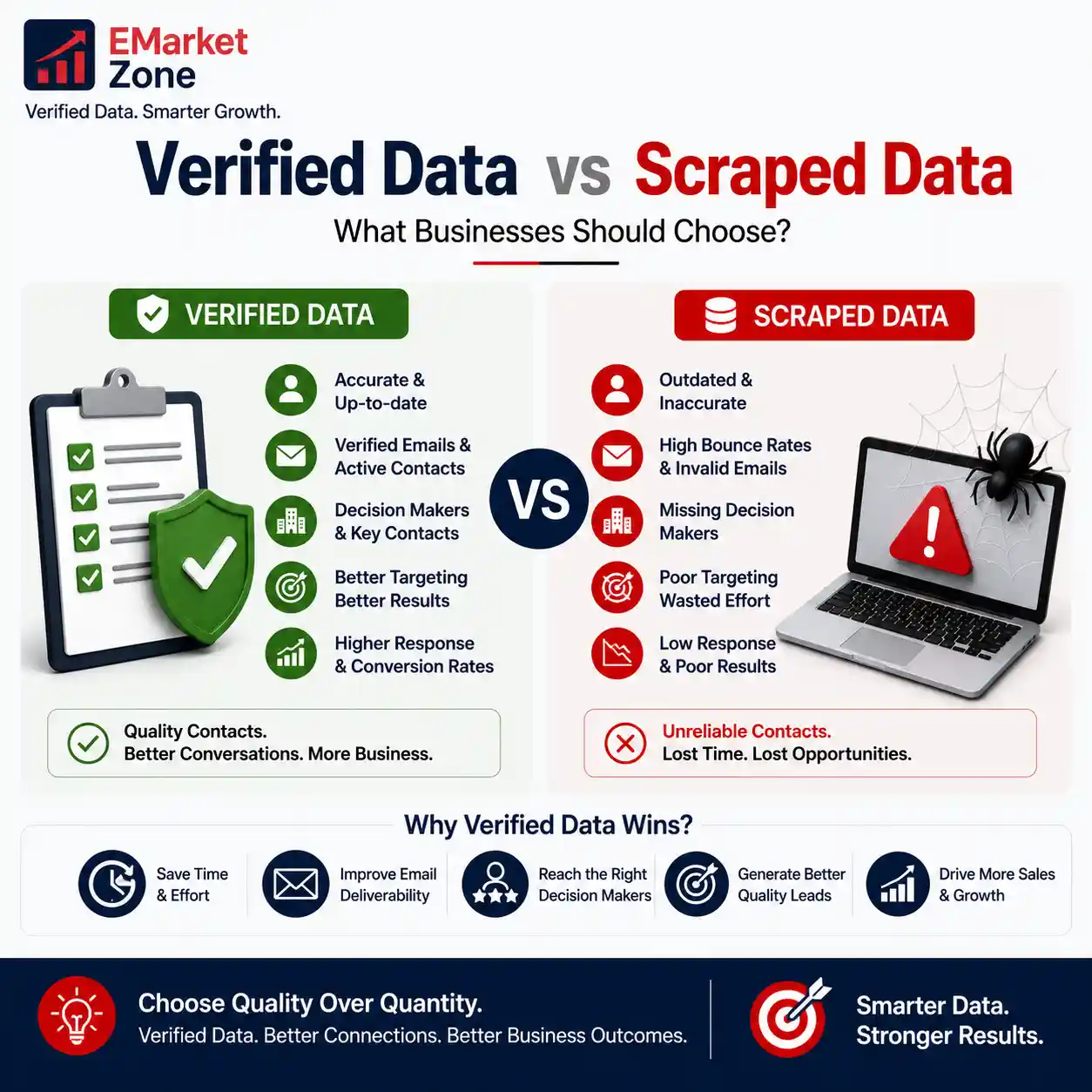
In reality, their data is failing.
When prospect lists contain:
• irrelevant companies
• outdated contacts
• incorrect information
performance naturally declines.
Verified Company Contacts India
https://emarketzone.in/verified-company-contacts-india/
What Businesses Should Focus On Instead
Rather than asking:
“How many contacts are included?”
Ask:
• Are these prospects relevant?
• Are they decision-makers?
• Is the information accurate?
• Does the audience match our ideal customer?
These questions usually matter more than database size.
Final Thoughts
The biggest weakness of generic databases is not accuracy.
It’s relevance.
Large databases often look impressive.
But lead generation is rarely improved by bigger numbers alone.
Businesses that focus on:
• targeting
• relevance
• decision-makers
• accurate information
usually generate better results than businesses chasing the largest database available.
In B2B lead generation, quality almost always beats quantity.
FAQs
A generic database contains businesses from multiple industries, locations, and categories without specific targeting.
They often contain large numbers of irrelevant prospects, making outreach less efficient.
For most B2B campaigns, targeted databases usually produce better results because they improve relevance.
Relevant prospects are more likely to engage, respond, and become customers.
Not necessarily. Accuracy and relevance often matter more than the number of contacts.
Company information, decision-maker contacts, industry details, and accurate communication data are typically the most valuable.
Leave a comment