
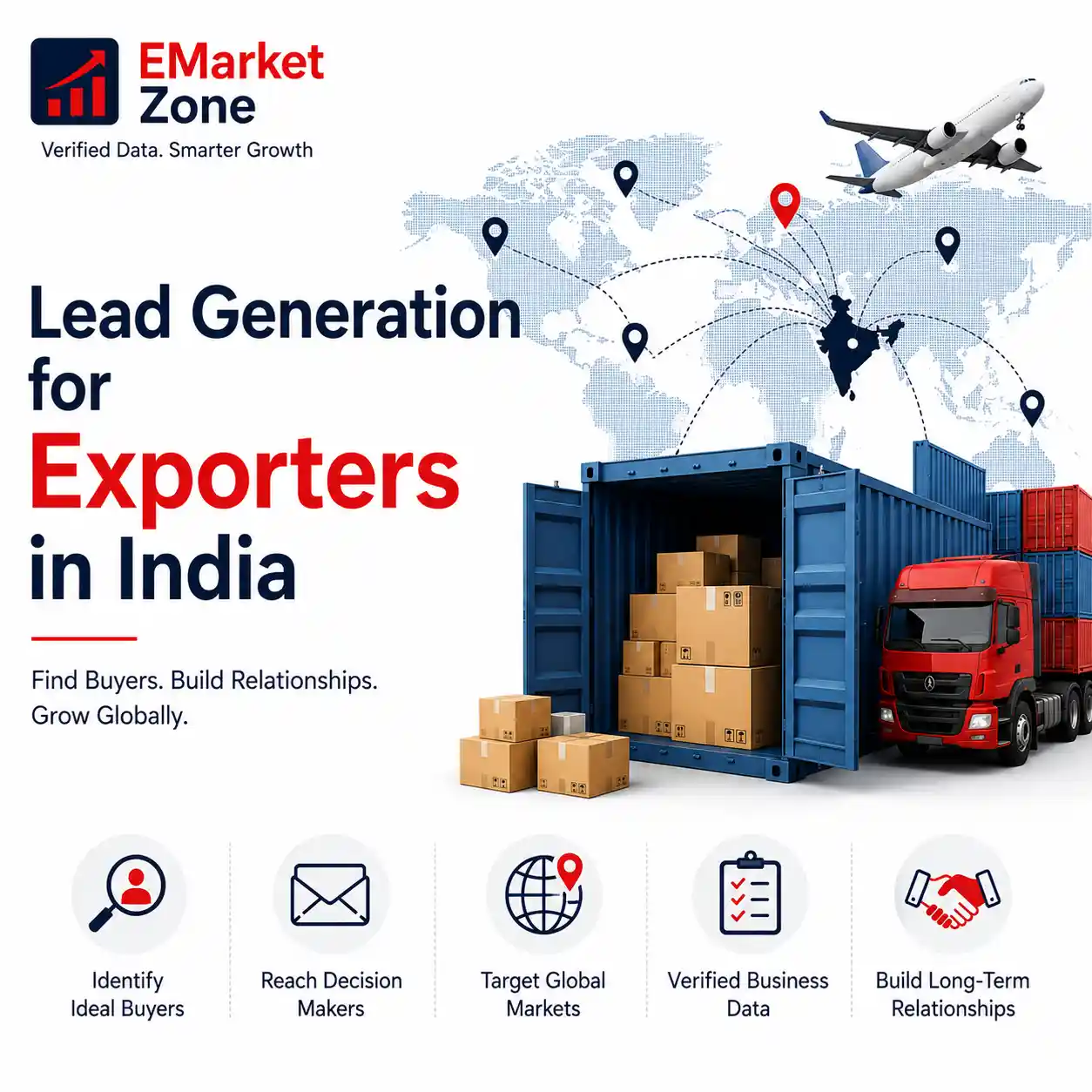
Many exporters have a common problem.
They know how to manufacture products.
They know how to manage logistics.
They understand documentation and compliance.
But they struggle to find a steady flow of buyers.
As a result, many export businesses become dependent on:
• trade fairs
• referrals
• existing customers
• marketplace inquiries
While these channels can generate business, they rarely provide predictable growth.
The exporters growing consistently usually have a system for generating leads rather than waiting for opportunities to appear.
Why Lead Generation Is Different for Exporters
Lead generation for exporters is different from local B2B lead generation.
Exporters often need to find:
• importers
• distributors
• wholesalers
• retailers
• procurement managers
• international buyers
The sales cycle is usually longer.
Trust is more important.
Competition is often global.
Because of this, exporters need a structured approach to finding opportunities.
The Biggest Mistake Exporters Make
Many exporters rely entirely on marketplaces.
Platforms like B2B marketplaces can be useful.
But they create a problem.
Every supplier is competing for the same buyer’s attention.
This turns lead generation into a race to the bottom.
The businesses that build direct relationships with buyers usually create stronger long-term opportunities.
Start With Your Ideal Buyer
Before generating leads, exporters should clearly define who they want to work with.
Questions include:
• Which countries should we target?
• Which industries need our products?
• What type of buyers are we looking for?
• What company size is the best fit?
Without clear targeting, outreach becomes inefficient.
Build a Targeted Prospect List
One of the most effective ways to improve lead generation is creating a structured prospect list.
A prospect list may contain:
• importers
• distributors
• wholesalers
• trading companies
• retailers
The objective is not collecting thousands of contacts.
The objective is identifying businesses that are likely to buy.
Business Leads India
https://emarketzone.in/business-leads-india/
Why Decision-Makers Matter
Many exporters spend time contacting companies without knowing who makes purchasing decisions.
Messages get sent to:
• support teams
• general inboxes
• reception desks
instead of decision-makers.
This slows down sales conversations.
Exporters often achieve better results when they target:
• owners
• directors
• procurement heads
• sourcing managers
Buy Decision Makers Data India
https://emarketzone.in/buy-decision-maker-data-india/
Email Outreach Still Works
Despite the growth of social media, email remains one of the most effective tools for export lead generation.
International buyers often prefer email because it creates a documented communication trail.
Effective outreach usually includes:
• a short introduction
• relevant product information
• clear business value
• a professional follow-up process
The goal is not to close a sale immediately.
The goal is to start a conversation.
Why LinkedIn Is Valuable for Exporters
LinkedIn provides direct access to business professionals worldwide.
Exporters can use LinkedIn to:
• identify buyers
• research companies
• build relationships
• understand industries
LinkedIn works especially well when combined with email outreach.
The Importance of Industry Segmentation
Not every buyer has the same requirements.
For example:
A food importer and an industrial distributor have completely different priorities.
Businesses that segment prospects by industry often achieve higher engagement because their messaging feels more relevant.
Industry Wise Business Database India
https://emarketzone.in/industry-wise-business-database-india/
Why Data Quality Matters
Poor data creates major challenges.
Common problems include:
• invalid emails
• outdated contacts
• incorrect job titles
• inactive businesses
Even the best outreach strategy struggles when the data is inaccurate.
Verified Company Contacts India
https://emarketzone.in/verified-company-contacts-india/
Why Follow-Up Is Critical
Many exporters give up after one email.
That is often a mistake.
International buyers receive numerous supplier inquiries every week.
A lack of response does not always indicate a lack of interest.
Consistent follow-up frequently creates opportunities that the first message does not.
Building a Predictable Export Pipeline
A pipeline helps businesses track:
• prospects
• conversations
• quotations
• follow-ups
• Opporunity
This creates a sales pipeline.
Without a pipeline, opportunities are easily lost.
With a pipeline, businesses can forecast growth more effectively.
What Works Best for Small Exporters?
Small exporters often have limited marketing budgets.
Instead of spending heavily on advertising, many focus on:
• targeted prospecting
• email outreach
• LinkedIn networking
• relationship building
This approach often provides a better return on investment.
This approach is often more affordable than large advertising campaigns.
MSME Business Database India
https://emarketzone.in/msme-business-database-india/
Final Thoughts
Lead generation for exporters is not about reaching everyone.
It is about reaching the right buyers.
The exporters that consistently generate opportunities usually focus on:
• targeted prospecting
• decision-makers
• industry relevance
• quality data
• consistent follow-up
Businesses that build structured lead generation systems generally create more predictable growth than businesses that rely solely on referrals or marketplaces.
FAQs
Exporters generate leads through email outreach, LinkedIn, trade fairs, referrals, B2B marketplaces, and targeted prospect databases.
Yes. Email remains one of the most effective ways to reach international buyers and procurement professionals.
Exporters can identify buyers through prospect databases, LinkedIn, trade directories, industry associations, and direct outreach.
Poor targeting, inaccurate data, generic messaging, and lack of follow-up are common reasons.
Yes. Decision-makers and procurement professionals typically influence purchasing decisions.
Yes. LinkedIn helps exporters identify buyers, research companies, and build professional relationships.
Accurate data improves outreach efficiency, reduces wasted effort, and increases the chances of reaching relevant buyers.


Leave a comment