
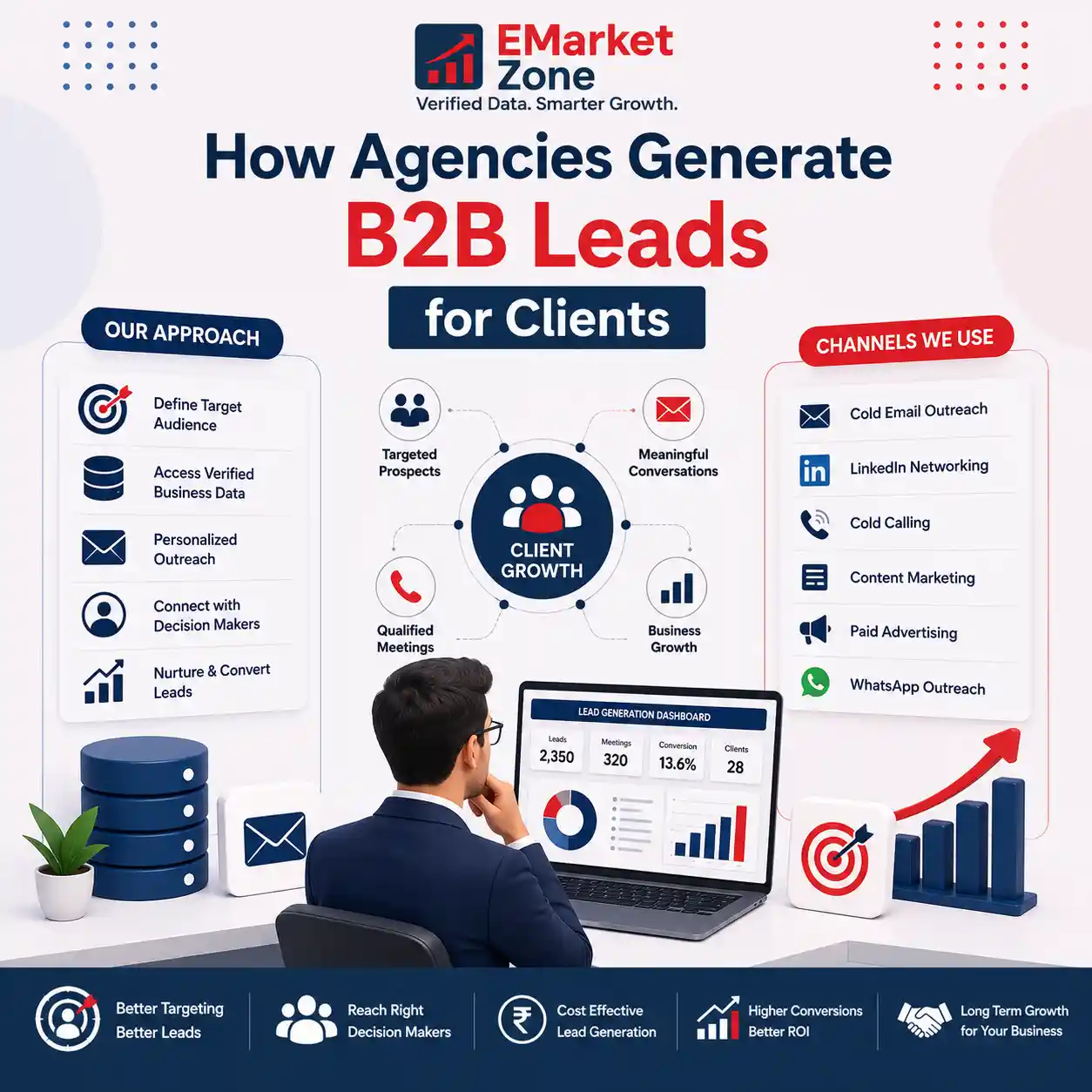
One of the biggest misconceptions about lead generation is that agencies have some secret method that ordinary businesses don’t know about.
Clients often assume agencies have access to hidden tools, exclusive databases, or special advertising tactics that magically generate leads.
The reality is much less exciting.
Most successful agencies generate leads using systems.
Not hacks.
Not shortcuts.
Not secret software.
The agencies consistently delivering results usually focus on:
• targeting
• data quality
• outreach
• follow-up
• optimization
The difference is not necessarily what they do.
The difference is how consistently they do it.
Why Most Businesses Struggle With Lead Generation
Before understanding how agencies generate leads, it’s important to understand why many businesses struggle.
Most businesses operate without a clear prospecting process.
Their lead generation often depends on:
• referrals
• random networking
• occasional advertising
• word-of-mouth
These methods can work.
But they are difficult to scale.
When growth depends entirely on referrals, revenue becomes unpredictable.
This is usually the point where businesses start looking for agencies.
The First Thing Agencies Do
Contrary to popular belief, agencies rarely start with advertising.
The first step is usually defining the target audience.
Many businesses say:
“Anyone can buy our service.”
That is almost never true.
Agencies typically identify:
• industries
• company sizes
• locations
• decision-makers
• business challenges
This process immediately improves targeting.
Because lead generation becomes focused rather than random.
Why Prospect Data Matters
A common mistake businesses make is trying to generate leads before identifying prospects.
Agencies usually do the opposite.
They first build a list of potential customers.
This list may include:
• company names
• business categories
• decision-makers
• email addresses
• phone numbers
Without accurate prospect data, even the best marketing campaigns become inefficient.
This is one reason many agencies rely on a verified business leads database.
Business Leads India
https://emarketzone.in/business-leads-india/
How Agencies Use Business Databases
A business database is not a lead generation strategy.
It is a prospecting resource.
Good agencies use databases to:
• identify target companies
• segment industries
• build outreach lists
• find decision-makers
This reduces the amount of time spent on manual research.
Instead of searching for prospects one by one, agencies can focus on outreach and conversations.
Company Database India
https://emarketzone.in/company-database-india/
The Role of Cold Email Outreach
Many agencies use cold email as a lead generation channel.
The reason is simple.
Email scales well.
A properly targeted email campaign can reach hundreds of relevant businesses without requiring a large sales team.
However, successful agencies rarely send generic messages.
Instead, they focus on:
• industry relevance
• business challenges
• personalization
• value propositions
The goal is not immediate sales.
The goal is starting conversations.
Business Email Database India
https://emarketzone.in/business-email-database-india/
Why Decision-Makers Matter
One major difference between professional agencies and inexperienced marketers is audience selection.
Many businesses contact:
• support departments
• generic company inboxes
• reception teams
Agencies usually target:
• founders
• owners
• directors
• senior management
This dramatically increases the likelihood of meaningful conversations.
Business Owner Contact List India
https://emarketzone.in/business-owner-contact-list-india/
Buy Decision Makers Data India
https://emarketzone.in/buy-decision-maker-data-india/
Content Marketing Still Matters
Many agencies combine outreach with content marketing.
Why?
Because businesses buy from companies they trust.
Content helps build that trust.
Common content formats include:
• blog posts
• case studies
• guides
• newsletters
• LinkedIn articles
Content rarely generates immediate sales.
But it improves credibility.
When prospects research a company after receiving outreach, strong content often improves conversion rates.
Do Agencies Use Paid Advertising?
Yes.
But usually with a specific purpose.
Good agencies do not rely exclusively on paid ads.
Instead they use advertising to:
• generate awareness
• attract inbound inquiries
• test messaging
• support sales campaigns
Paid advertising works best when combined with other lead generation systems.
Businesses relying entirely on advertising often face rising acquisition costs over time.
Why Follow-Up Is Critical
One of the biggest reasons businesses fail to generate leads is lack of follow-up.
A prospect may ignore:
• the first email
• the second email
• the first call
That does not necessarily mean they are not interested.
They may simply be busy.
Most agencies build structured follow-up systems.
This often includes:
• email sequences
• LinkedIn engagement
• follow-up calls
• reminder campaigns
Many opportunities are created during follow-up rather than the initial contact.
Why Agencies Focus on Systems
Successful agencies understand something important.
Lead generation is not a single activity.
It is a process.
That process typically includes:
• prospect identification
• audience segmentation
• outreach
• follow-up
• qualification
• conversion
Businesses that focus only on one step often struggle.
Businesses that build complete systems usually perform better.
Why Verified Data Creates Better Results
Not all databases are equal.
Poor-quality data creates problems such as:
• bounced emails
• invalid numbers
• wasted outreach
• low response rates
This is why many agencies prioritize verified contacts.
Accurate data improves:
• targeting
• deliverability
• efficiency
• campaign performance
Verified Company Contacts India
https://emarketzone.in/verified-company-contacts-india/
Verified Leads India
https://emarketzone.in/verified-leads-india/
How Agencies Generate Leads for MSMEs
MSMEs often operate with smaller budgets than large enterprises.
As a result, agencies usually focus on cost-efficient strategies.
These may include:
• targeted databases
• cold email outreach
• LinkedIn networking
• WhatsApp communication
• content marketing
This creates a predictable lead generation process without requiring large advertising budgets.
MSME Business Database India
https://emarketzone.in/msme-business-database-india/
Final Thoughts
Most agencies do not generate leads because they have secret tools.
They generate leads because they follow structured processes consistently.
The strongest lead generation systems usually combine:
• accurate prospect data
• audience targeting
• decision-maker outreach
• content marketing
• follow-up systems
Businesses that adopt these principles often achieve better results whether they work with an agency or build lead generation internally.
FAQs
Most agencies use a combination of business databases, cold email outreach, content marketing, LinkedIn networking, paid advertising, and follow-up systems.
Yes. Many agencies use business databases to identify prospects, segment industries, and build targeted outreach campaigns.
Yes. Cold email remains one of the most scalable outreach channels when combined with accurate targeting and relevant messaging.
No. Most successful agencies combine paid advertising with outbound outreach and content marketing.
Successful campaigns typically include accurate data, strong targeting, personalized communication, and consistent follow-up.
Leave a comment